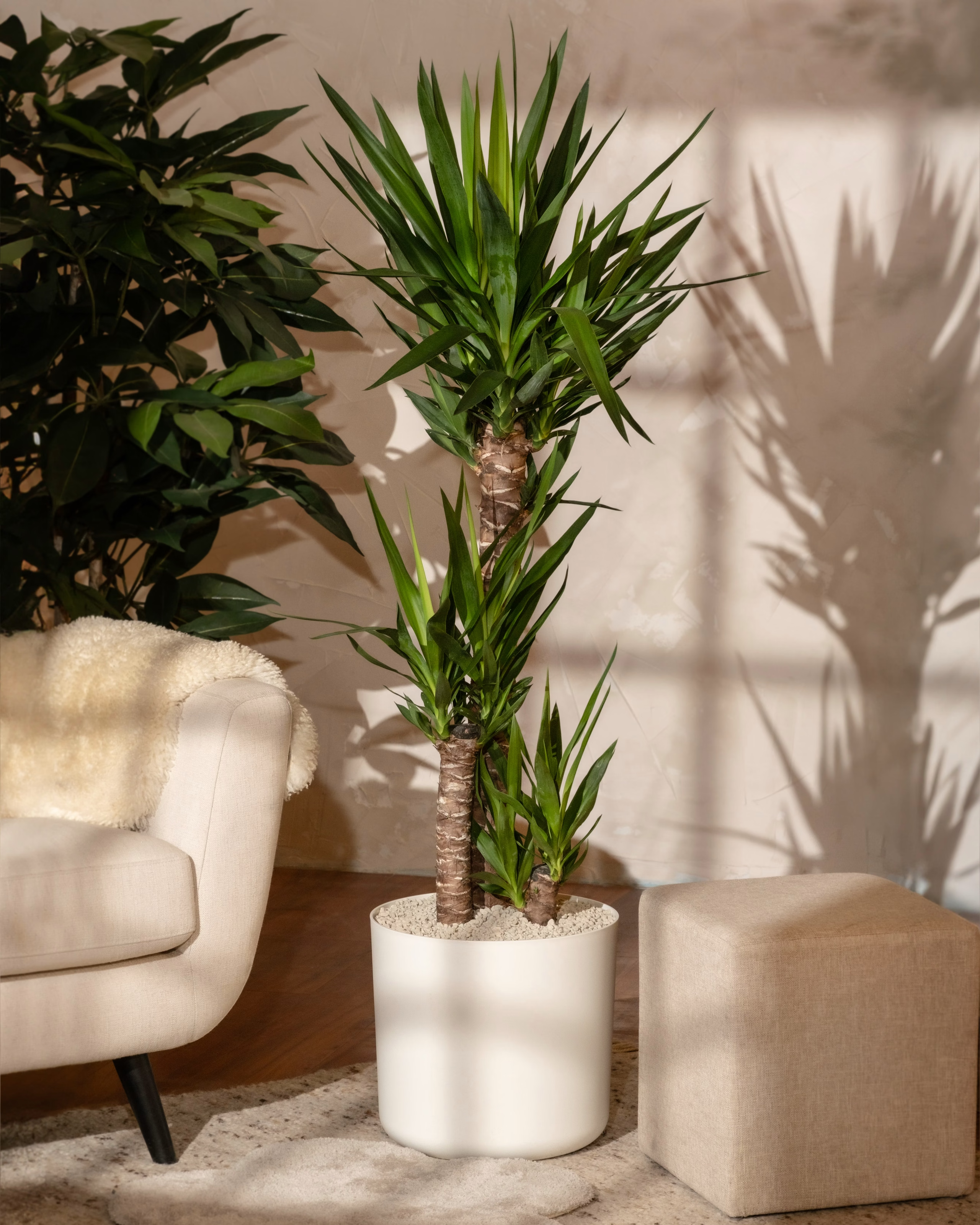
Yucca looks like a mini palm with editorial style: thick woody trunk, sword-green leaves and almost no demands at all. Give it sun and it thrives for years.
Origin and natural habitat
Yucca elephantipes comes from dry parts of Mexico and Central America, where it grows as a small tree. There it endures both drought and fierce sun — two traits that made it a classic houseplant.
Care
Light
A south-facing window is yucca paradise — the more direct light the better. In dim spots the leaves grow thin and droopy.
Watering
Water thoroughly but rarely: let the soil dry out completely between waterings, usually every two to three weeks. In winter once a month is often enough.
Soil and feeding
Sandy, free-draining soil — cactus mix works well. Feed sparingly. Repot only when the pot cracks; the root system is small.
Common problems
Brown leaf tips usually come from dry air or sparse watering — trim with scissors. Soft trunks mean root rot from overwatering. Yellow lower leaves are natural ageing.
Good to know
In its native range yuccas are pollinated exclusively by a single small moth — one of nature's most specialised symbioses. Note: toxic to pets.