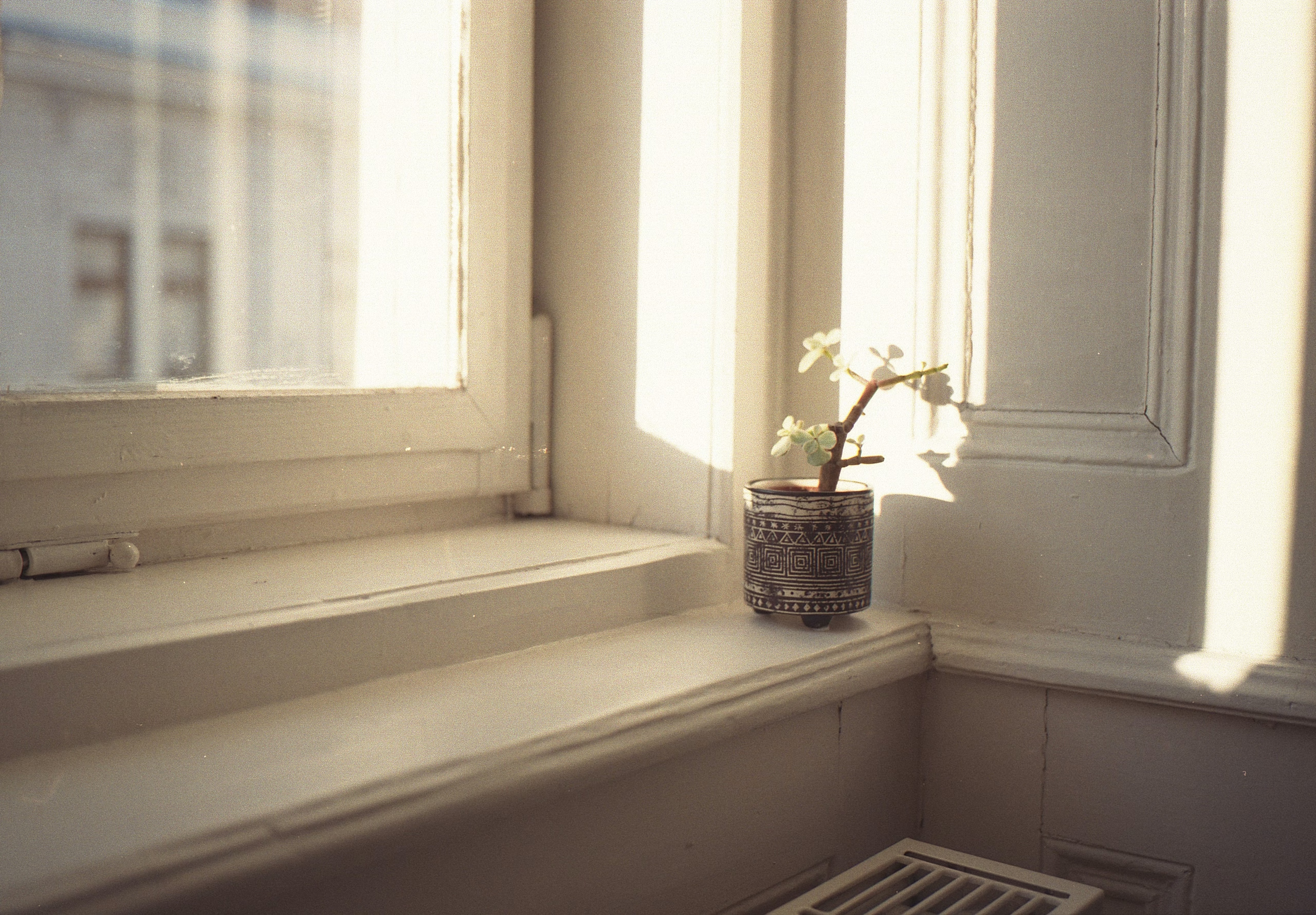
Light and Placement
Light is the fuel of photosynthesis — it is literally what drives all plant growth. Yet incorrect placement is one of the most common reasons why houseplants don't thrive. Understanding light means understanding half of all plant care.
How light is measured
Light intensity is measured in lux (lx) or photon flux density (PPFD), but we don't need to get complicated for home growing. It's enough to understand the four practical light categories:
Full sunlight
More than 10,000 lux — direct sun
Direct sunlight hitting a surface without any filter. On a south-facing window in summer. Suitable for: cacti, aloe vera, geraniums, most summer flowers.
Bright indirect light
2,000–10,000 lux
Close to a sunny window, but without direct rays — for example in the air near a south-facing window, or right next to an east-facing one. Suitable for: monstera, orchids, golden cane palm, many tropical plants.
Moderate light
500–2,000 lux
A few metres from a window, or close to a north-facing window. Suitable for: calathea, ZZ plant, peace lily, snake plant.
Low light
Below 500 lux
Deep inside a room, or in a poorly lit corner. Very few plants truly thrive here, but some survive — like the ZZ plant and pothos.
The compass and your home
The direction your windows face makes an enormous difference:
| Direction | Character | Best plants |
|---|---|---|
| South | Most light, warmest, direct sun | Cacti, succulents, herbs |
| East | Morning sun, milder | Orchids, ferns, begonias |
| West | Afternoon sun, warm | Monstera, philodendron, most tropicals |
| North | Least light, no direct sun | ZZ plant, pothos, peace lily |
Signs your plant isn't getting enough light
- Pale, yellowing leaves
- Long, leggy stems that "reach" toward the window
- Slow or no growth
- Small new leaves
- Leaves drooping toward the light
Signs your plant is getting too much light
- Bleached or yellowed leaves in a washed-out tone
- Brown, scorched patches (especially on tender, thin leaves)
- Wilting despite adequate watering
- Dry, crispy leaf edges
Practical tips for better light
Clean your windows — dust reduces light transmission by up to 20%.
Rotate the pot — a quarter turn every week ensures even growth and prevents the plant from leaning.
White walls reflect light — placing plants near white walls or using light-coloured surfaces can make a noticeable difference.
Grow lights — if you have a dark home, full-spectrum grow lights are a game-changer. Modern LED models are energy efficient and effective.
Seasonal changes — in Sweden, the difference in light intensity between summer and winter is dramatic. Move plants closer to windows in autumn and consider grow lights for the darkest months.
Distance from the window matters
Light decreases exponentially with distance from a window. At just 1 metre from a window you may have only 25% of the light available right at the glass. Most plants want to be within 1–2 metres of a window to thrive.
Light is the one variable you cannot compensate for with other care. A plant in too little light will slowly decline no matter how perfectly you water and fertilise it.
Getting the placement right from the start makes all subsequent plant care easier and more rewarding.