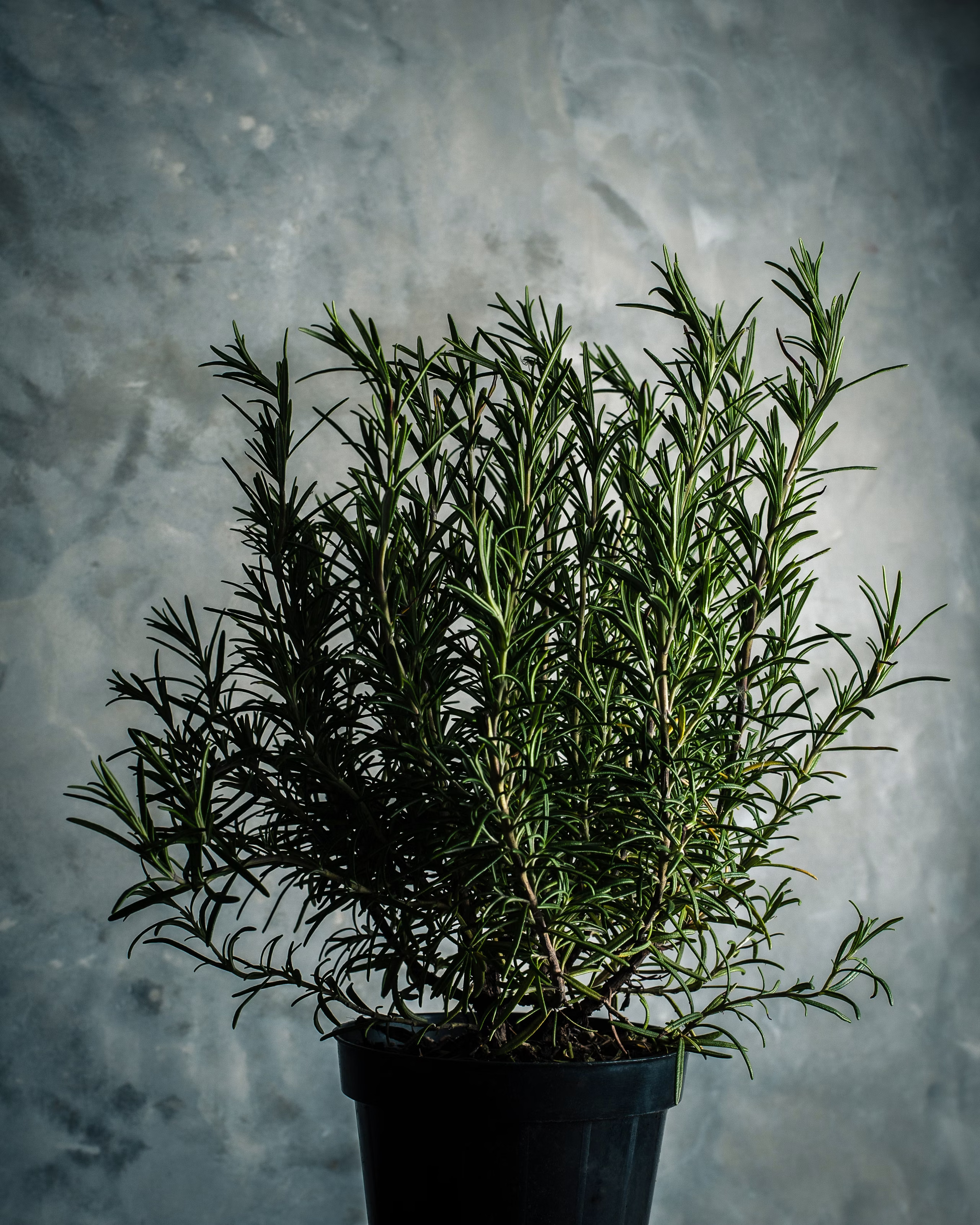
Rosemary smells of holidays in Provence and is one of the toughest herbs. Happy in a pot, overwintered cool, it supplies roast-friendly harvests year-round.
Origin and natural habitat
Rosemary grows wild on dry, lime-rich Mediterranean coastlines. The name comes from Latin ros marinus — "dew of the sea" — after the droplets that gather in its flowers.
Care
Light
As much sun as possible. Indoors: a south-facing window. Outdoors: a warm, sheltered spot. Swedish winter: keep cool and bright, at 5–15 °C.
Watering
Let the soil dry between waterings — rosemary prefers drought to damp. Water sparingly in winter.
Soil and feeding
Sandy, chalky, free-draining soil. Feed sparingly. Prune after flowering for density; dry sprigs whole or ground.
Common problems
Brown branches usually come from overwatering or winter damage. Powdery leaves mean mildew in stagnant air. Leggy growth signals low light.
Good to know
Rosemary can live for decades and grows into a small bush with age. It has long been associated with memory — "rosemary for remembrance". Safe for cats and dogs.