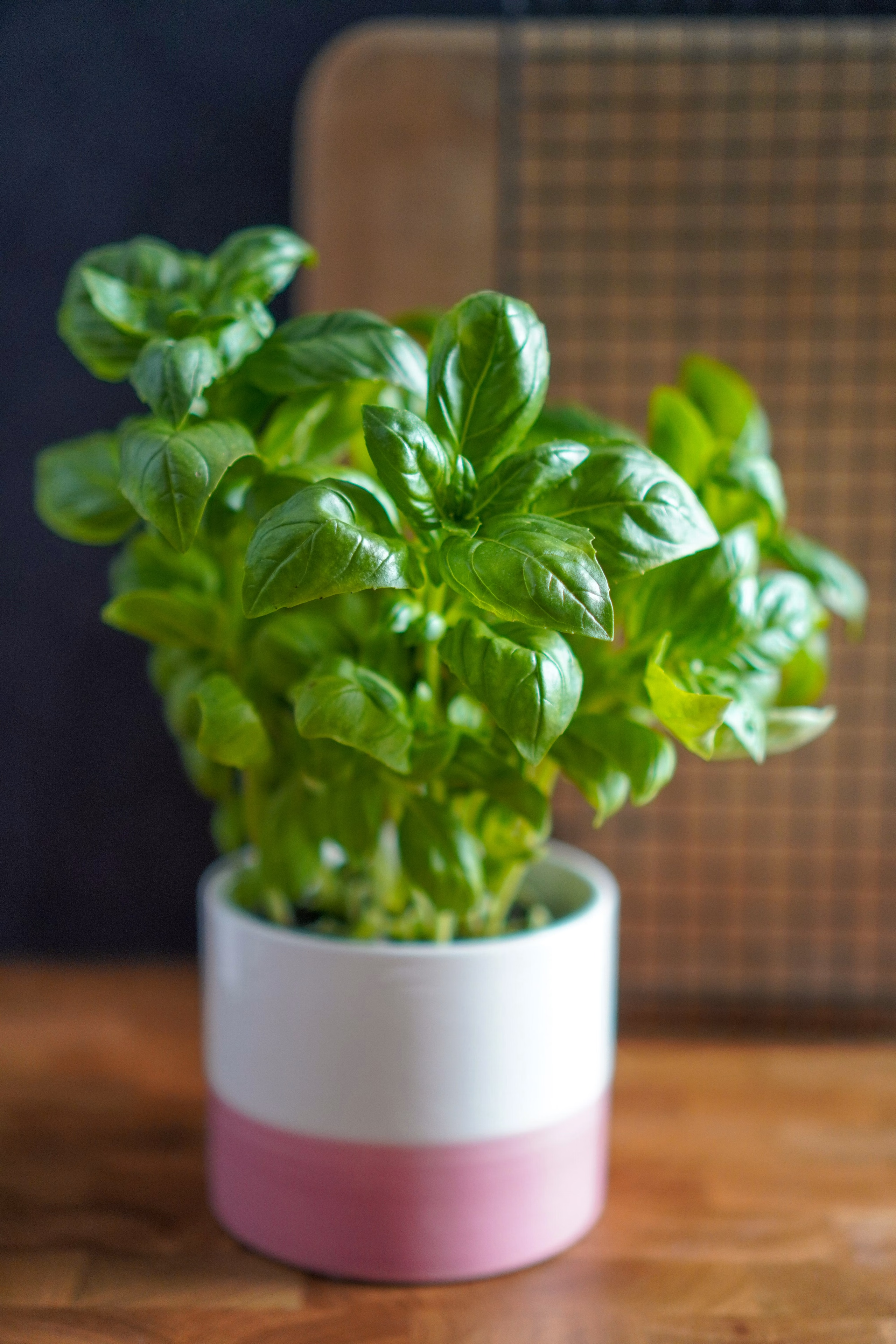
Basil is one of the world's oldest and most appreciated culinary herbs, with roots in India and Southeast Asia. In Europe it became established through Mediterranean countries and is today synonymous with Italian cuisine. Arabs used basil for medicinal purposes as long as 4,000 years ago.
Popular Basil Varieties
- Genovese – The classic Italian basil with large, dark green, glossy leaves. The foundation of pesto and caprese.
- Thai Basil – Spicy with notes of anise and clove. Indispensable in Southeast Asian cooking.
- Purple Basil (Dark Opal) – Dark purple, decorative leaves with a strong flavour. Beautiful in salads.
- Lemon Basil – Citrus-scented, fresh and light. Perfect with fish and seafood.
- Nano Compatto – Compact dwarf variety ideal for pots and windowsills.
Care
Light
Basil loves sun. At least 6 hours of direct sunlight per day. Indoors — place in the sunniest window, preferably south-facing. Without sufficient light the plant stretches and becomes weak.
Watering
Water regularly and keep the soil evenly moist — never dry, never soggy. Basil is sensitive to drought (leaves droop) but also suffers from overwatering (yellow leaves, root rot). Water at the base, avoid wetting the leaves.
Feeding
Feed lightly every two to three weeks with a balanced, liquid fertiliser.
Pruning
Clip regularly to keep the plant bushy and productive. Always cut just above a pair of leaves — the plant branches and gives twice as much. Pinch out flower stems as soon as they appear — once basil flowers, the aromatic content of the leaves decreases and the plant focuses on setting seed.
Temperature
Basil is sensitive to cold — below 10 °C the leaf edges are damaged and the plant dies. Keep it indoors until nights are reliably warm.
Harvest and Storage
Always harvest from the top down and never take more than a third of the plant at once. Store cut stems in a glass of water at room temperature — the refrigerator damages basil.
For longer storage: freeze basil leaves (whole or as pesto) or dry them in the oven on low heat.