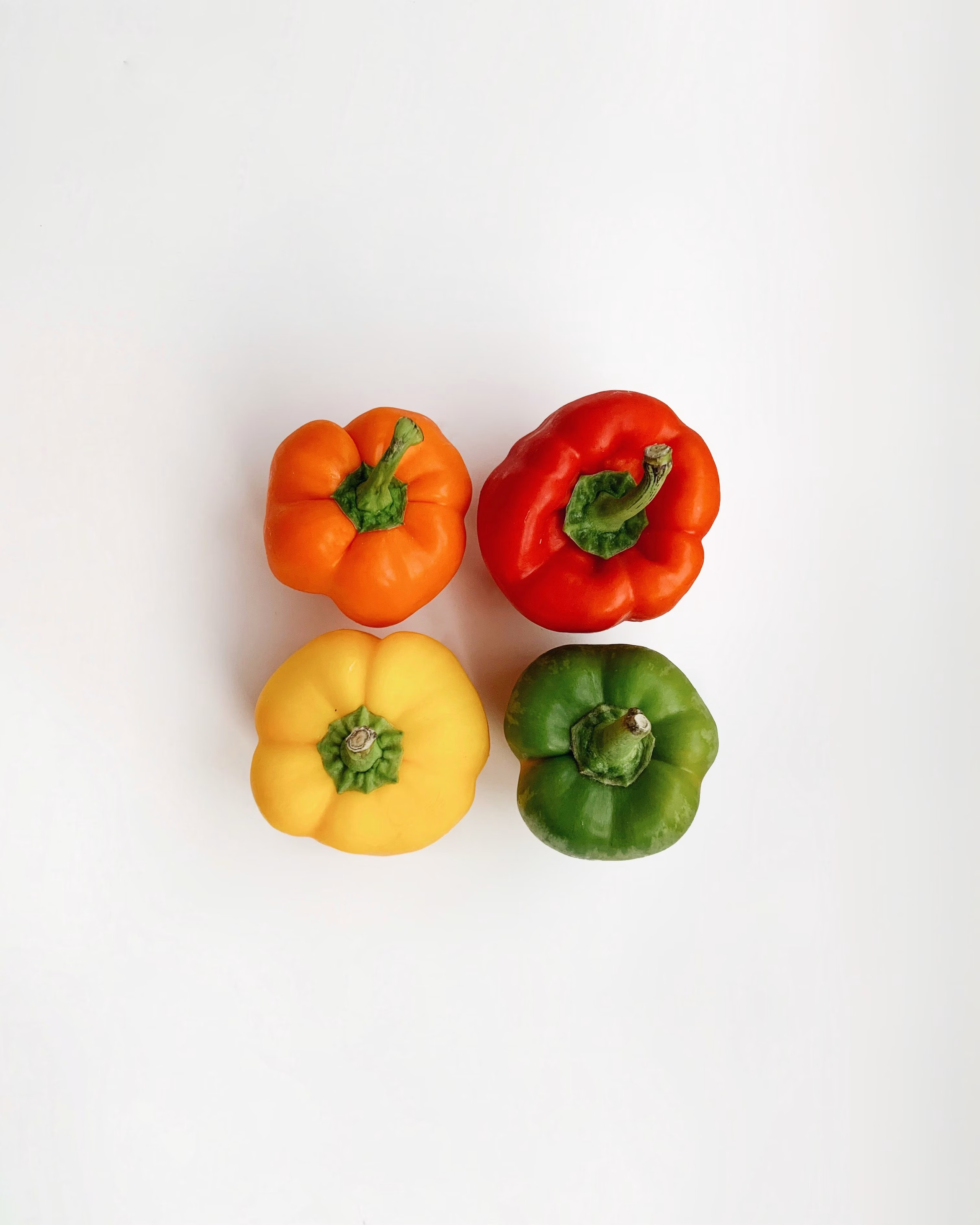
The bell pepper originates from Central America and has been cultivated in Mexico and South America for thousands of years. It is one of the most widely consumed vegetables in the world and exists in a remarkable diversity of shapes, colours and flavours — from sweet and blocky to long and slender.
Popular Bell Pepper Varieties
- California Wonder – The classic block pepper. Large, squarish, thick-walled fruit that ripens from green to red. Mild and sweet.
- Yolo Wonder – Similar to California Wonder but with better resistance to tobacco mosaic virus.
- Gypsy – Early, productive hybrid pepper with thinner walls and pale yellow-orange fruit. Excellent fried.
- Lamuyo – Long, elongated Spanish variety, sweet and meaty. Outstanding roasted.
- Cubanelle – Light green to yellow, thin-walled and mild. Popular in southern European and Latin American cooking.
Care
Light
Bell peppers need plenty of sun and warmth. At least 6–8 hours of direct sunlight per day. Grow in the warmest south-facing position or in a greenhouse — peppers love heat.
Watering
Water regularly but not too generously. Let the topsoil (top 2–3 cm) dry out slightly between waterings. Bell peppers are more drought-tolerant than tomatoes but do not like sitting in soggy soil.
Feeding
Start with a balanced fertiliser, switch to high-potassium feed when flowering begins. Feed every two weeks. Too much nitrogen produces lush foliage but little fruit.
Staking
The pepper plant should be supported with a bamboo cane or small cage, especially once the fruits begin to weigh down the branches. Do not remove side shoots — peppers naturally form a bushy shape.
Soil & Pot
Use a good, well-draining potting mix. A pot of 10–15 litres per plant is sufficient.
Common Problems
Flower drop without fruit set at temperatures below 15 °C or above 35 °C — protect the plant on cold nights.
Aphids and thrips are common pests. Treat with a soap solution or an approved biological insecticide.
Waterlogged roots if drainage is inadequate — choose a pot with drainage holes.
Harvest
Bell peppers can be harvested green (unripe), but fully ripened red, yellow or orange peppers have more sugars and vitamins. Green peppers take around 70 days from transplanting; red ripeness takes a further 3–4 weeks.