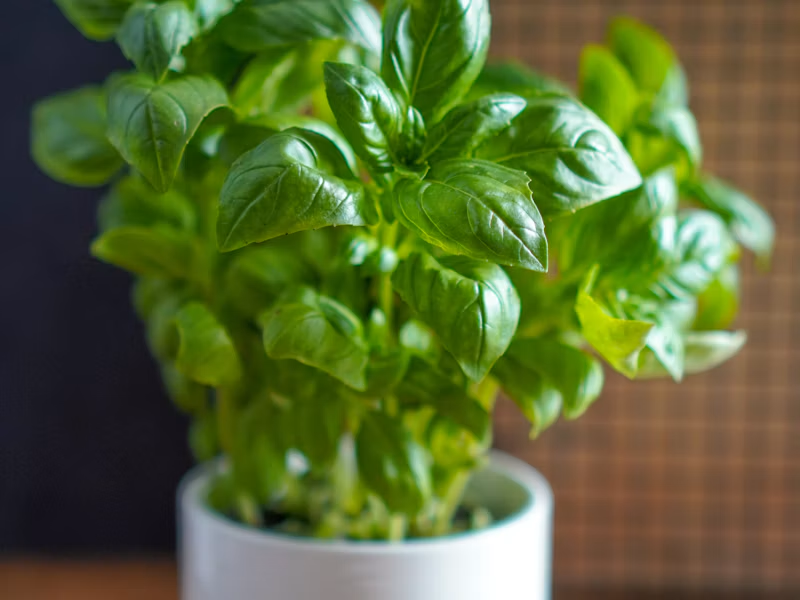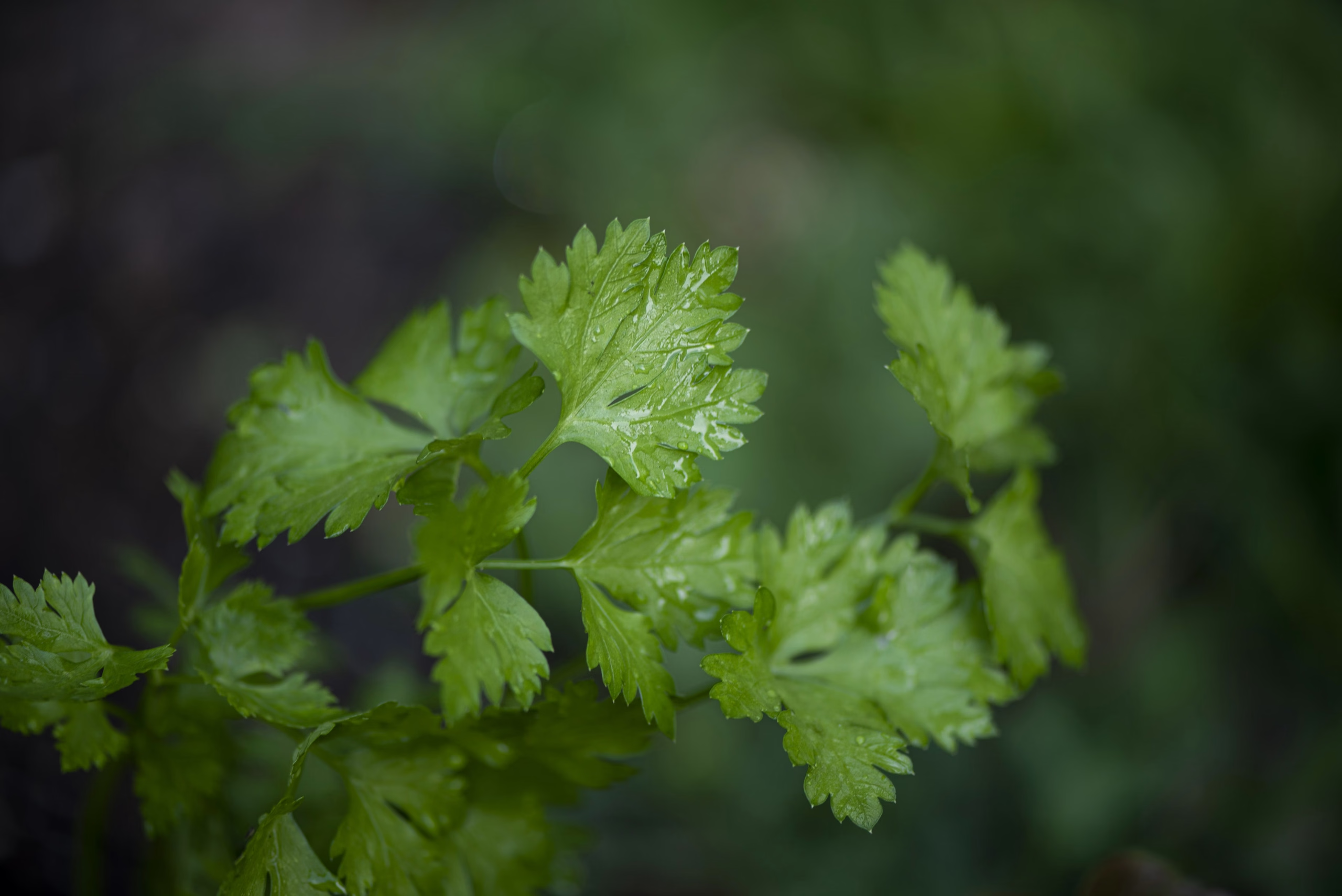
Parsley is the kitchen garden's staple: easy, nutritious and always useful. Curly parsley is the prettiest; flat-leaf has the most flavour.
Origin and natural habitat
Parsley originates from the Mediterranean and has been grown for over 2,000 years — from Greek cooking to Victorian tables. In the wild it grows on stony ground in humid climates.
Care
Light
Sunny to partially shaded. Indoors: a south- or east-facing window. Outdoors: sow in June–July for a winter harvest under fleece.
Watering
Keep the soil evenly moist — parsley never enjoys drought. Water when the surface dries, preferably in the morning.
Soil and feeding
Rich, free-draining soil. Sow directly or buy plants; feed lightly through summer. Harvest outer leaves and the plant keeps producing from the centre.
Common problems
Yellow leaves mean nutrient deficiency or drought. Larvae eating leaves are parsley worm/caterpillars: pick them off. Slow germination is normal — parsley seeds can take three weeks; sow only one centimetre deep.
Good to know
Parsley is rich in vitamin C and iron — in the Middle Ages it was chewed against bad breath. Safe for cats and dogs.