Cacti are among nature's most fascinating life forms — organisms that over millions of years have perfected the art of surviving in the most challenging conditions on the planet. Indoors, they are among the most trouble-free plants you can keep, as long as they get what they truly need: sun and well-draining soil.
Origin & Diversity
The cactus family (Cactaceae) consists of over 1,700 species and originates almost exclusively from the Americas — from Canada's prairies to Patagonia's steppes. The Aztecs and other indigenous peoples used cacti as food, water, and medicine for thousands of years. The only cactus species naturally occurring outside the Americas is Rhipsalis baccifera, found in Africa and Sri Lanka — probably spread by birds.
Popular Types for Home Growing
Globe cactus (Echinocactus, Mammillaria)
Compact, round forms perfect for windowsills. The Mammillaria genus offers hundreds of species in all sizes and often blooms prolifically in pink, white, and red. Very easy to care for.
Column cactus (Cereus, Trichocereus)
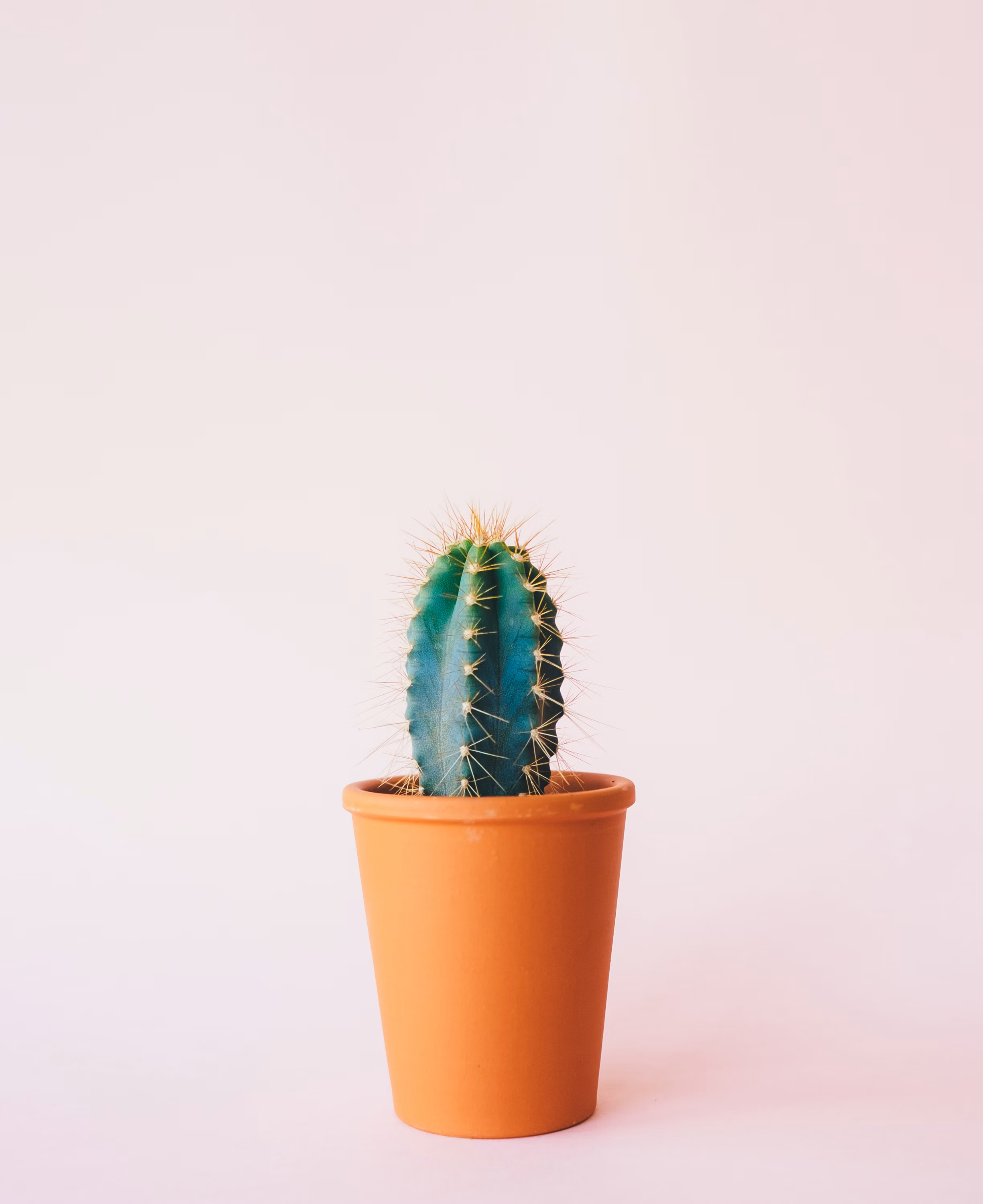
Upright, columnar cacti that can reach several metres. Sleek and dramatic — a column cactus in a corner position is a real eye-catcher.
Prickly pear (Opuntia)
With their characteristic flat, paddle-shaped segments, opuntia is one of the most recognisable cacti. Note: the microscopic glochids (hair-like spines) fasten easily in the skin and are difficult to remove.
Christmas cactus (Schlumbergera)
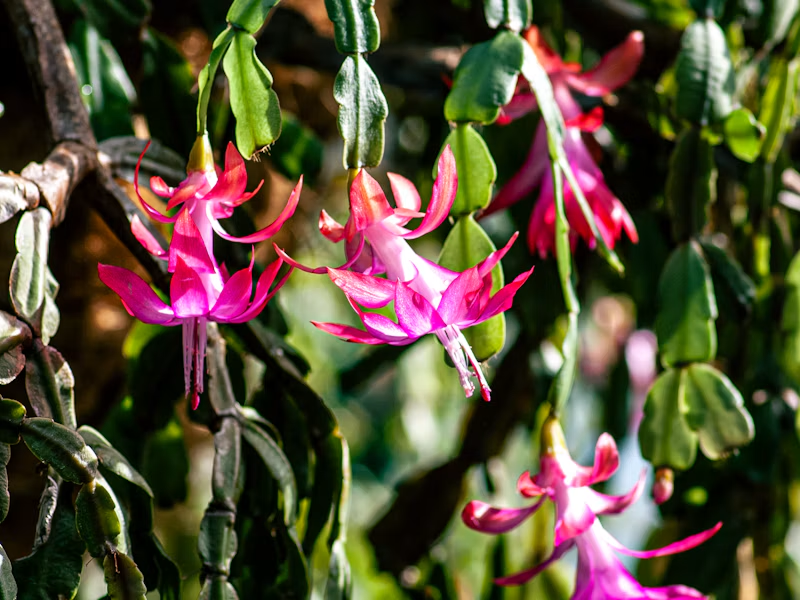
Unlike most cacti, the Christmas cactus originates from Brazilian rainforests and needs a little more moisture and a shadier position. Blooms spectacularly in red, pink, or white around Christmas.
Light
Most cacti need full sun. Place on a south-facing windowsill or west-facing window with afternoon sun. Without sufficient sun, the cactus "etiolates" — stretching toward the light and losing its compact, attractive form. An etiolated cactus never recovers its original shape.
Watering — Less Is More
Overwatering is the cactus's number one enemy. During summer (April–September), water generously every 2–3 weeks and then let the entire soil ball dry out completely. During winter — October to March — the cactus enters a natural rest and should be watered extremely sparingly or not at all. Many cacti only flower if they have had a dry, cool winter period (8–15 °C).
Soil
Cactus and succulent soil is essential. Standard potting soil retains too much moisture. Add extra sand or perlite for maximum drainage. A terracotta pot with a large drainage hole is ideal.
Flowering
Most cacti can flower indoors with proper care. The key: sufficient sun in summer, a dry and cool winter period (10–15 °C, almost no water), and a gradual restart with watering and warmer temperatures in spring. The blooming can be brief — one day to a week — but is extraordinarily beautiful.
Safety & Handling
Cactus spines are obvious, but glochids (the hair-fine spines on opuntia) are more dangerous — they penetrate skin easily and are hard to remove. Always handle cacti with thick gloves or folded newspaper, never with bare hands.