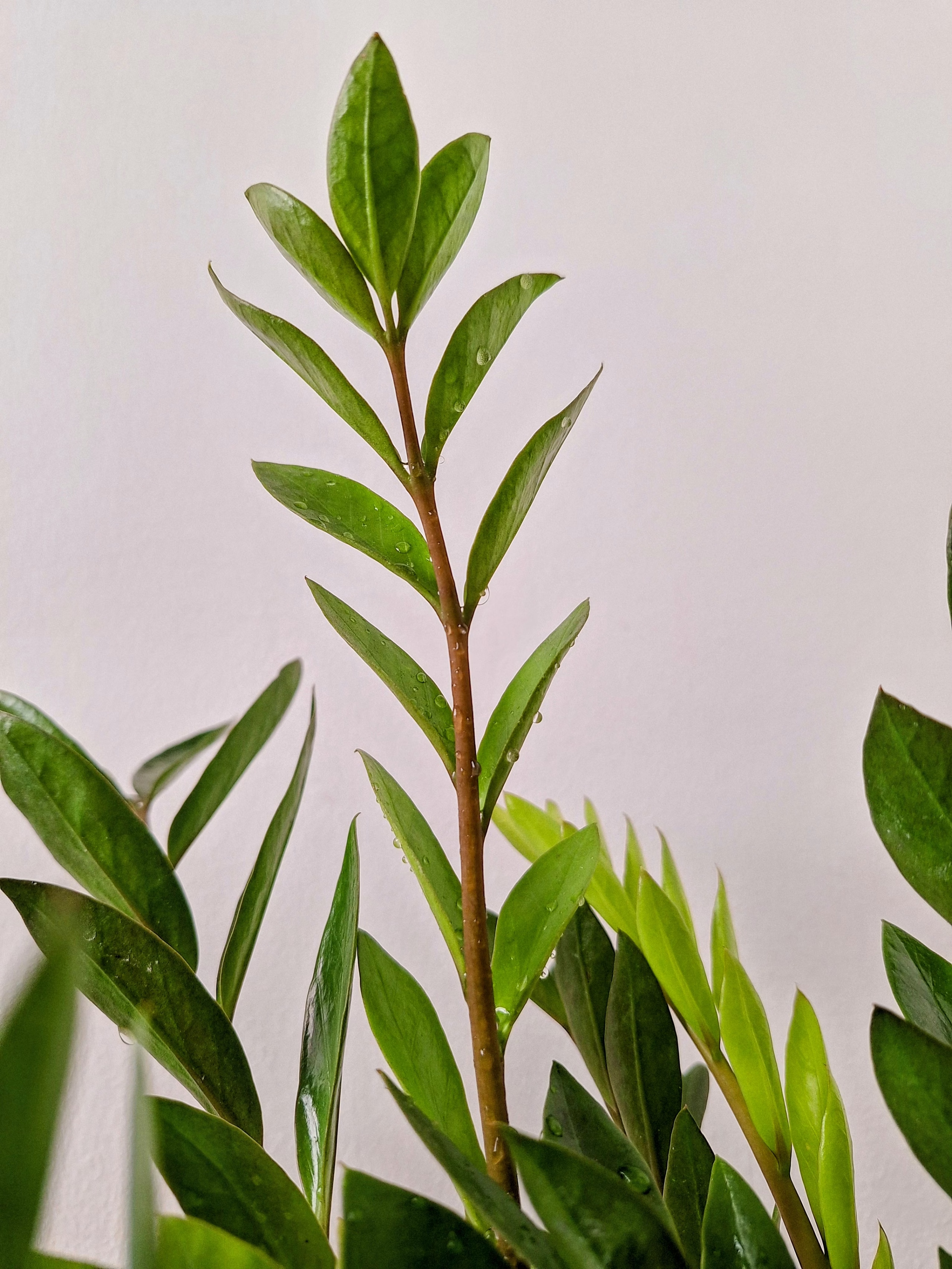
The ZZ plant — a nickname for the tongue-twisting Zamioculcas zamiifolia — has over the past decade exploded in popularity to become a firm favourite in Scandinavian homes and office spaces around the world. It is easy to understand why: the arching stems with paired, deep-green and high-gloss leaves exude a sleek, almost sculptural beauty.
Origin
The ZZ plant originates from the dry savannas and rocky terrain of East Africa — Kenya, Tanzania, and Zimbabwe. There it copes with long dry spells thanks to its thick rhizomes (underground storage tubers) that function as water tanks. These rhizomes are what make the ZZ plant nearly impossible to kill by drought. Botanically, the ZZ plant is the only species in its genus and has no close relatives — a unique and fascinating plant life.
Light
The ZZ plant tolerates low light better than most houseplants and thrives in positions where other plants give up. It prefers moderate indirect light but handles everything from near a north-facing window to the middle of a room. Just avoid direct sun, which can burn the leaves. Note: in very low light, the ZZ plant grows extremely slowly — this is normal.
Watering — Less Is More
The ZZ plant is drought-tolerant thanks to its water-storing rhizomes. Water generously approximately every 3–4 weeks in summer and less often in winter. Let all the soil dry out between waterings. Overwatering is the only serious threat to this plant.
Tip: Lift the pot — if it feels light, it's time to water.
Soil & Pot
Well-draining soil is essential. Mix standard potting soil with perlite (2:1) or use cactus and succulent soil. A pot with drainage holes is obligatory.
Feeding
Fertilise sparingly — once or twice a year with a standard liquid fertiliser during the growing season. The ZZ plant is a slow grower and doesn't need much nutrition.
The Black ZZ Variant
The most sought-after variety is 'Raven' (Zamioculcas zamiifolia 'Raven') with almost black, purple-black leaves. New leaves emerge green and then darken successively — a spectacular drama to follow. Care is identical to the standard form.
Toxicity
The ZZ plant is toxic and should be kept away from pets and children. The sap in the stems and leaves contains calcium oxalate crystals that can cause irritation in the mouth and digestive tract if eaten. Wash hands after handling.
Common Problems
Yellow leaves — the most common cause is overwatering. Let the soil dry out completely and check that the pot is not sitting in standing water.
Leaf drop in autumn/winter — normal! The ZZ plant enters a rest period. Reduce watering and wait for spring.
Slow growth — natural for the ZZ plant. One new stem per season is not unusual. Give it more light if you want to stimulate faster growth.