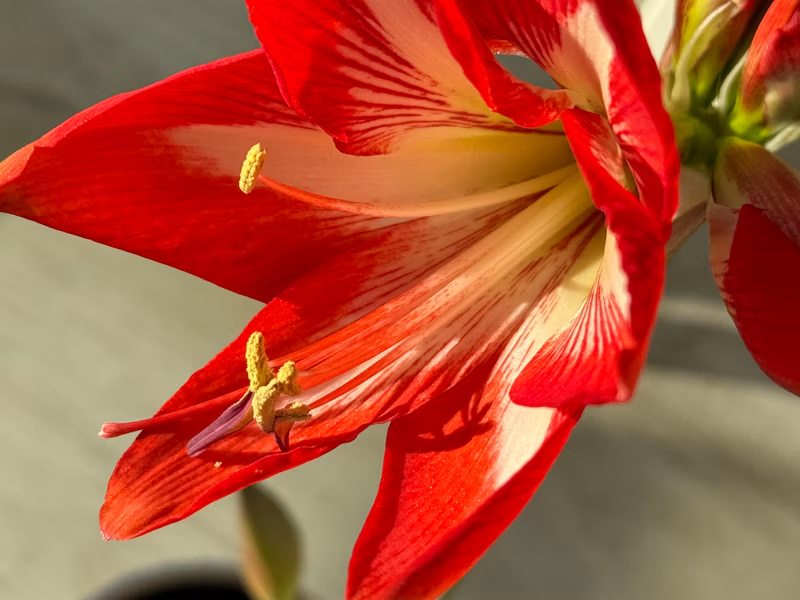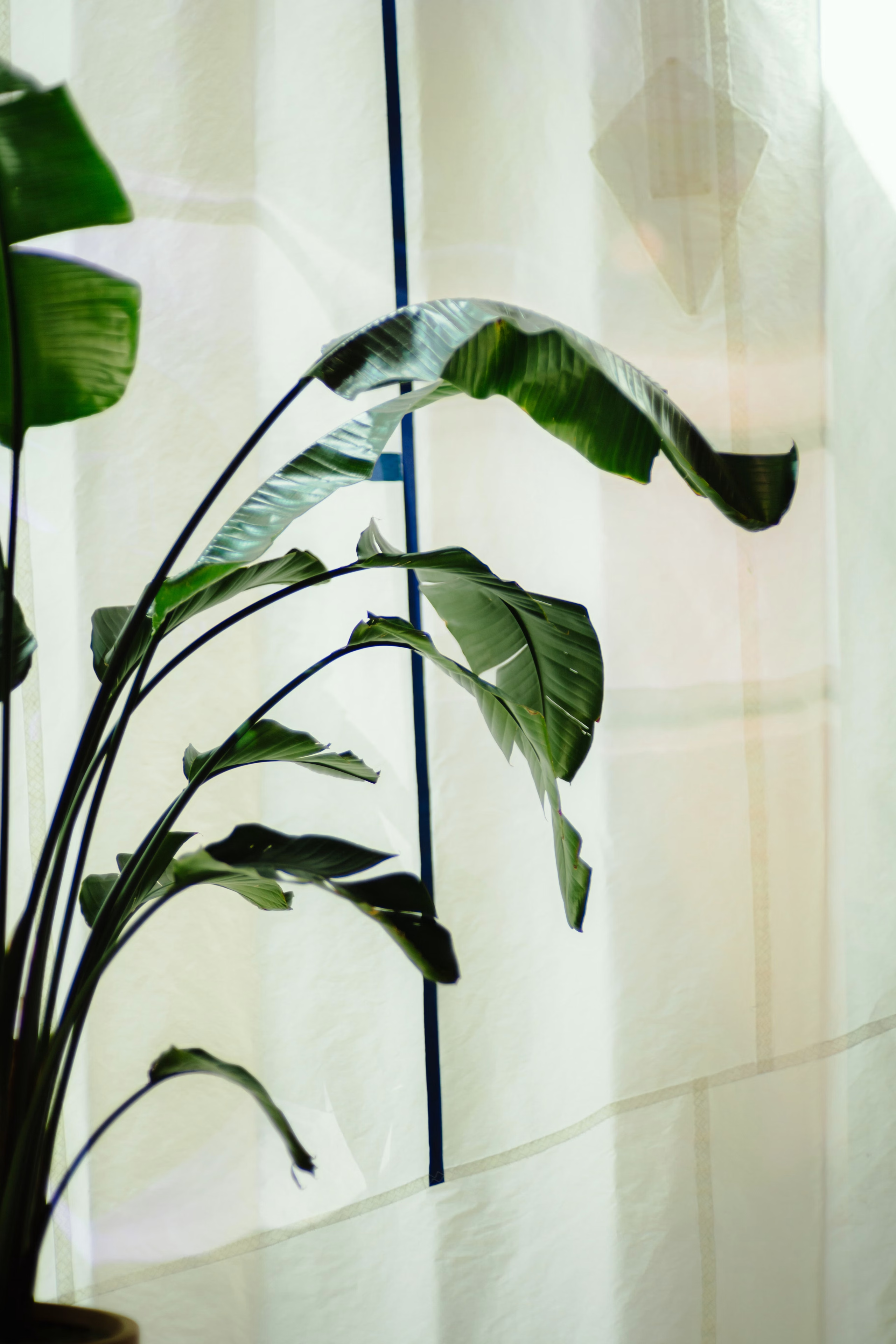
Strelitzia reginae — the bird of paradise — is a plant that truly lives up to its dramatic name. The large, blue-grey-green leaves on orange stems create a sculptural elegance, and the flowers are among the most spectacular in the plant kingdom: orange and blue petals emerging from a green bract, like a tropical bird lifting toward the sky. It is a genuine showstopper.
Origin
The bird of paradise originates from the dry coastal regions of eastern South Africa, from Natal down to the Cape Province. There it grows in semi-arid shrubland and along riverbanks, with seasonal rains and intense sunlight. This explains its love of light and tolerance for dry periods.
Light — The Key to Flowering
Strelitzia needs plenty of light — ideally direct sun for a couple of hours daily. Without sufficient light it rarely flowers indoors. Place it in the brightest window you have, ideally south- or west-facing. It can be placed outdoors in summer (acclimatise gradually) to stimulate flowering.
Watering
Water generously but infrequently — let the top 5 cm of soil dry out thoroughly. The bird of paradise has thick, fleshy roots that store water. In winter you can reduce to every two to three weeks. Root rot is the most common problem — avoid standing water in saucers.
Flowering Indoors
Getting a strelitzia to flower indoors requires patience and the right conditions:
- Mature plant: Young plants (under 3–5 years) rarely flower
- Plenty of light: Without direct sun, flowering won't occur
- Rest period: A cooler period in autumn (12–15 °C) stimulates flower bud development
- Slightly pot-bound: Strelitzia actually flowers best when the roots are a little cramped
Fertilising
Fertilise every two weeks during the growing period with a high-phosphorus fertiliser. During flowering you can increase the frequency slightly.
Repotting
Repot infrequently — strelitzia prefers to be root-bound. Repot only every two to three years, or when roots are growing out of the drainage holes. At repotting time you can divide the root to create new plants.
Care Tips
- Wipe the leaves with a damp cloth to keep them free of dust
- Cut off wilted leaves and flower spikes at the base
- Rotate the pot regularly for even growth
Common Problems
- Yellow leaves: Overwatering
- Brown leaf edges: Dry air or fluoride in the water — switch to rainwater
- Split leaves: Normal! In nature, leaves are split by wind — this is natural behaviour
- No flowering: Wrong light, plant too young, or lacking a rest period