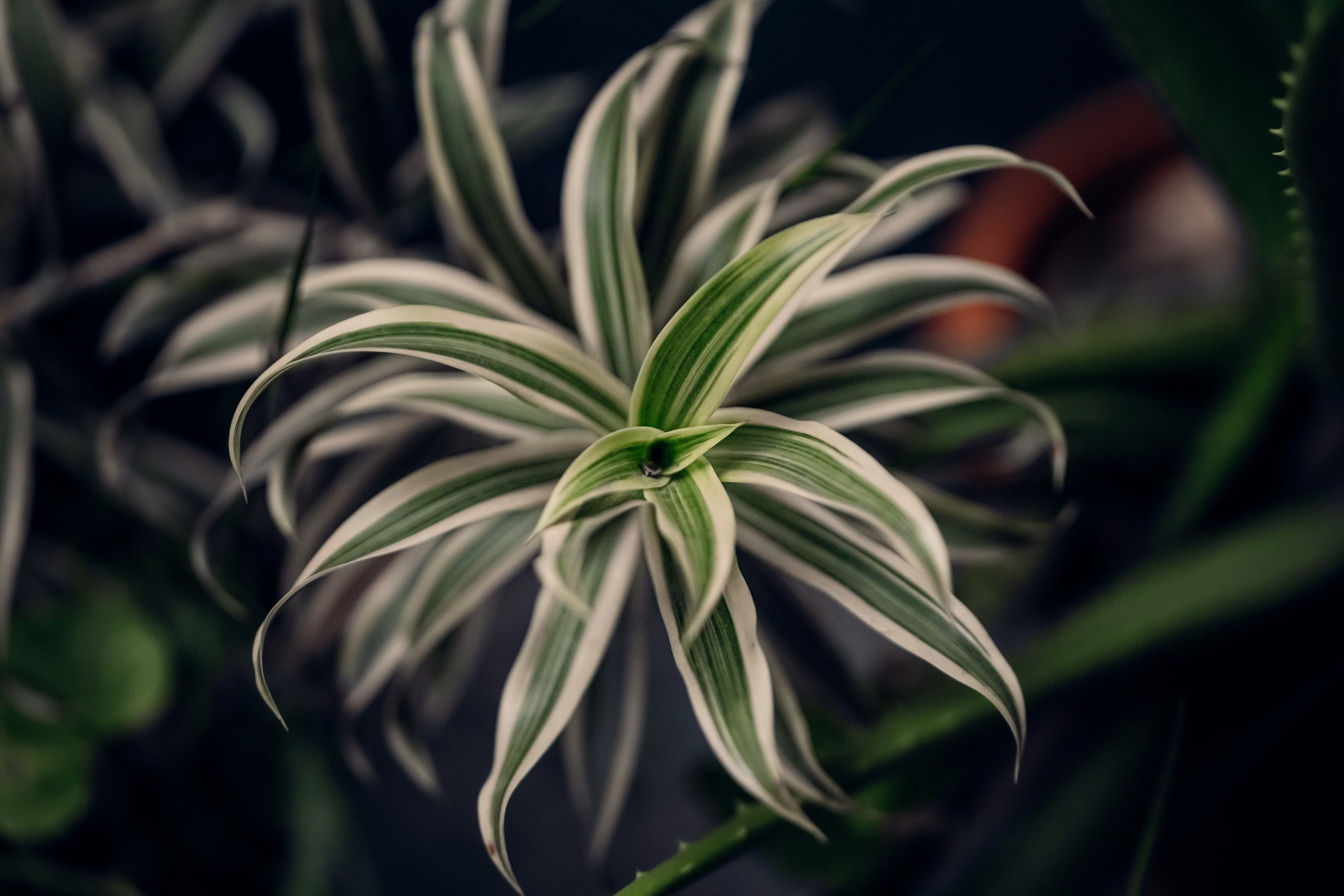
The spider plant is a classic houseplant — beloved by generations for its easy-care nature, beautiful arching leaves, and the charming miniature plantlets that hang in long threads below the mother plant. It is a plant that gives back more than you put in.
Origin
Chlorophytum comosum originates from the subtropical and tropical forests of southern Africa. There it grows as a ground cover under trees, adapted to variable light and intermittent rainfall. These traits explain why it copes so well in indoor environments with irregular watering and variable light conditions.
Light
The spider plant does best in moderate to bright indirect light but handles semi-shade well. Variegated varieties (with white or yellow stripes) need a little more light to retain their colouring. Direct sun causes brown, scorched leaf tips.
Watering
Water regularly and keep the soil evenly moist during summer. The spider plant tolerates some drying out but does best with regular watering. In winter, reduce watering — the plant is resting. The leaf tips can turn brown if the water contains too much fluoride or chlorine. Use filtered water or let tap water stand for a day before watering.
The Runners — A Home for Babies
One of the spider plant's most beloved features is its "baby plants" (stolons) — long, arched stems with miniature plantlets at the tips. These can be left hanging for a dramatic effect in a hanging basket, or cut off and planted in their own pots in moist soil. Roots form quickly and it is one of the easiest ways to propagate a plant.
Placement
The spider plant is fantastic in a hanging basket at about 1–2 metres height, where the runners can hang freely. It also does well on a high bookshelf or pedestal. Avoid drafts and cold positions in winter.
Air Purification
The spider plant is on NASA's list of air-purifying plants and has been shown to effectively absorb formaldehyde and xylene — common substances from furniture, textiles, and cleaning products.
Popular Varieties
- 'Vittatum' — classic variety with white central stripe on green leaves
- 'Variegatum' — green leaves with white edges (reverse marking to Vittatum)
- 'Bonnie' — compact, curly and wavy leaves — exquisitely decorative
- Green form — solid green leaves, more robust, somewhat less ornamental
Common Problems
Brown leaf tips — almost universally normal for spider plants. Most common causes: fluoride/chlorine in tap water, dry air, dry soil. Trim the brown tips along the leaf's natural shape.
White patches on leaves — sun or water damage. Move away from direct sun.
No runners — the plant needs to become a little more established and pot-bound, or needs more light, to produce runners.