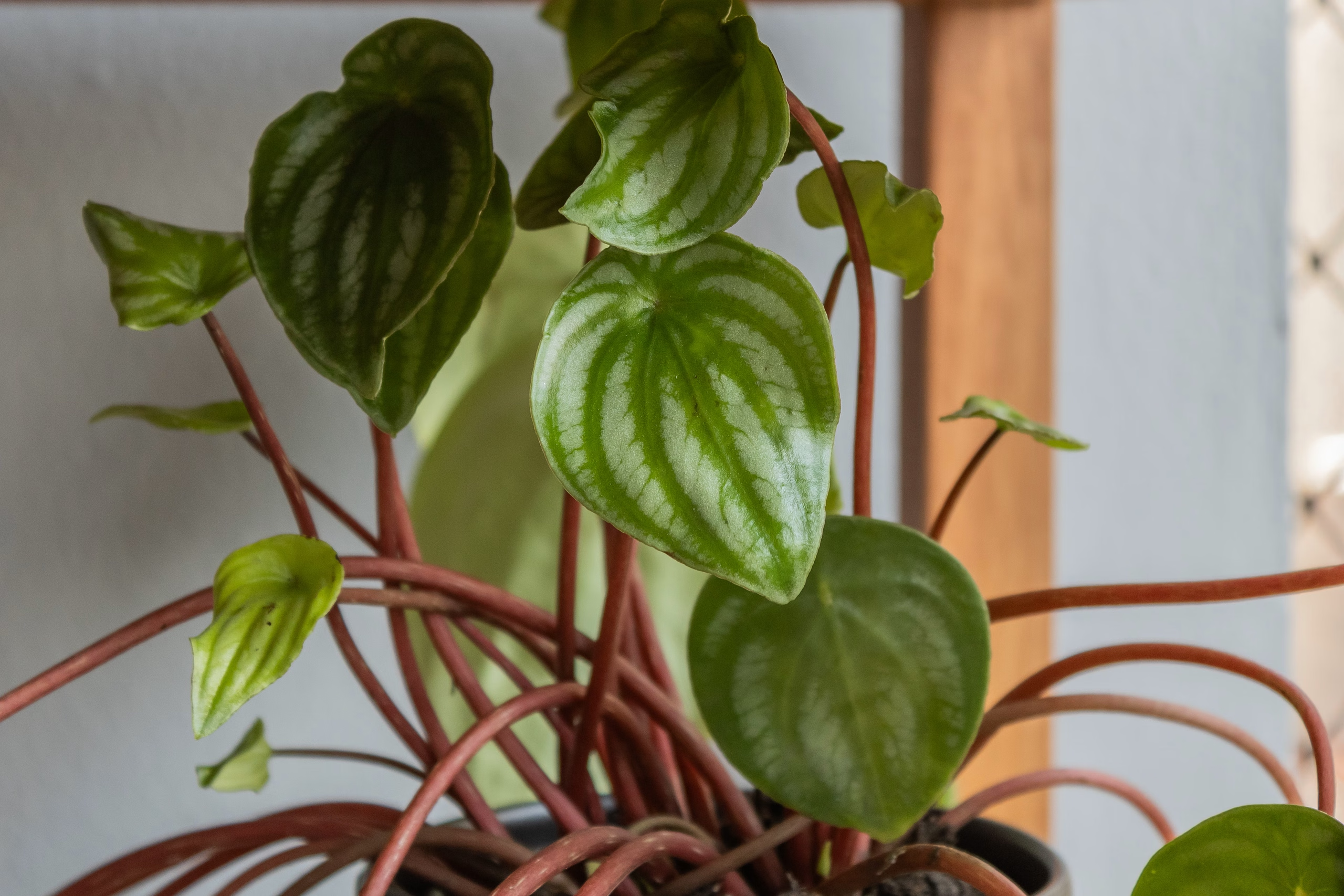
The pilea looks almost like a drawing — perfectly round, glossy leaves held up like tiny umbrellas. It is easy to care for, grows quickly, and generously produces small offshoots you can share.
Origin and natural habitat
Pilea peperomioides comes from the mountain regions of Yunnan in southwestern China, where it grows in shady mountain forests. It remained almost unknown in the West until the 1980s and then spread among enthusiasts via cuttings — hence its nickname, the friendship plant.
Care
Light
Give your pilea bright indirect light, ideally near an east- or north-facing window. Direct midday sun can scorch the leaves, while too little light makes it leggy. Rotate the pot a quarter turn weekly for even growth.
Watering
Let the top 2–3 centimetres of soil dry out between waterings — usually weekly in summer and every other week in winter. A thirsty pilea droops dramatically but bounces back quickly after a drink.
Soil and feeding
Standard potting soil mixed with some perlite works well. Feed sparingly every other month during the growing season. Repot when roots escape the drainage holes, and remove offshoots if you want to propagate them.
Common problems
Yellow, falling leaves usually mean overwatering — though it is normal for the oldest leaves to yellow over time. White spots on the leaf undersides are natural mineral deposits, not pests. Single-stem growth can be encouraged to branch with more light.
Good to know
Every pilea in Europe descends from a handful of smuggled specimens — it is still rare in commercial cultivation and spreads mostly from friend to friend.