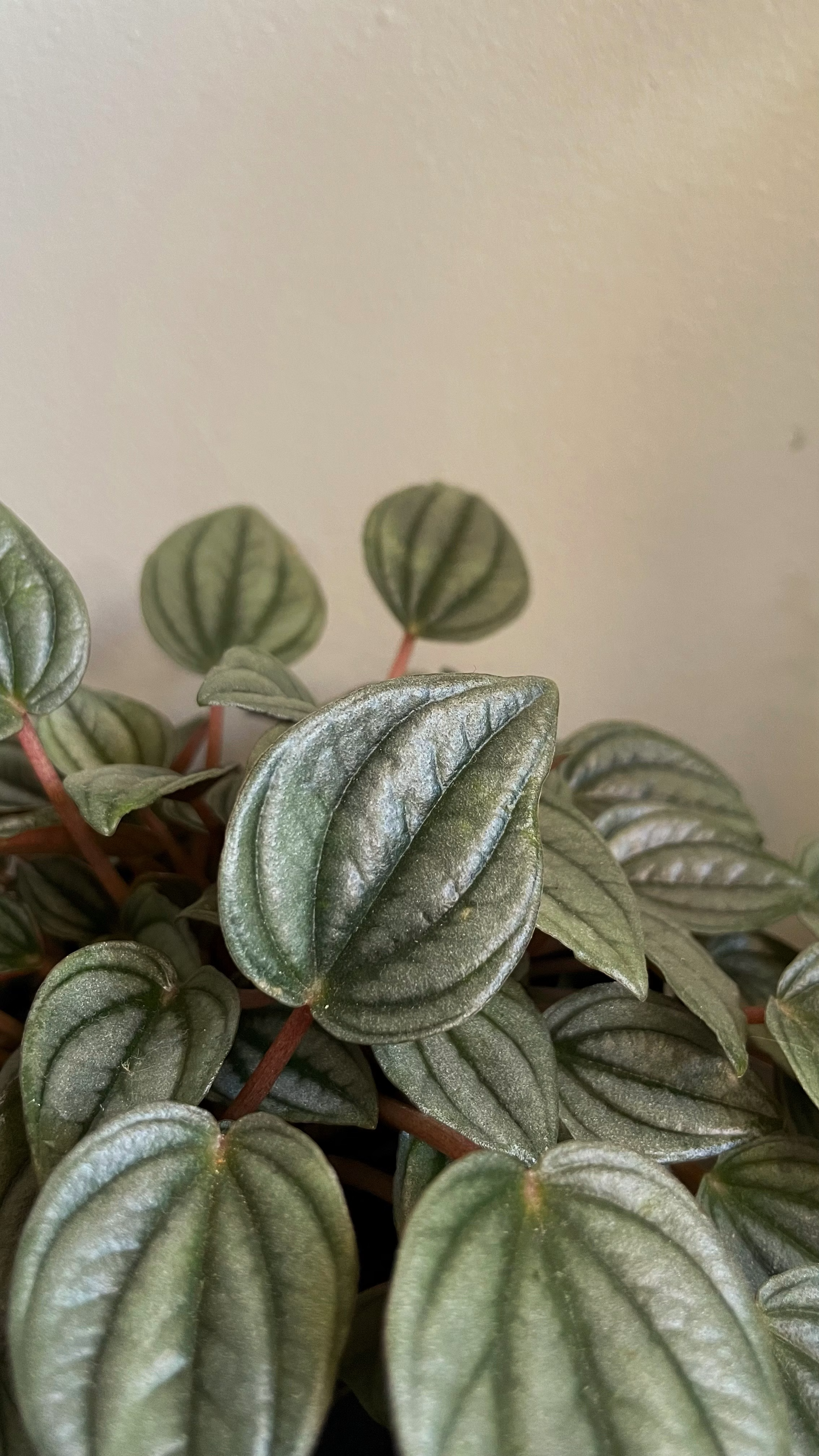
Peperomias are compact, immaculate plants with fleshy, water-storing leaves. They ask for very little, grow slowly, and suit anyone who wants greenery without fuss.
Origin and natural habitat
The Peperomia genus includes more than 1,500 species across tropical America. Obtusifolia grows as an epiphyte or on the forest floor from Florida through the Caribbean to South America — hence its tolerance for shady spots.
Care
Light
Indirect light is ideal, but peperomia copes with everything from half shade to bright spots. Just avoid scorching afternoon sun that can discolour the thick leaves.
Watering
The leaves store water, so let the soil dry out properly between waterings — often every two to three weeks. Overwatering is the only thing that seriously harms this plant.
Soil and feeding
Use airy, free-draining soil, ideally cactus mix blended with a little potting soil. Feed lightly once a month in summer. Repot rarely — peperomias like being slightly pot-bound.
Common problems
Drooping leaves can mean either too much or too little water — check the soil. Rotting stems signal overwatering; let the soil dry and remove damaged parts. Grey-white patches may be powdery mildew from poor air circulation.
Good to know
Peperomias are relatives of the pepper plant — the genus name literally means "pepper-like", and some species have been used as a pepper substitute at home.