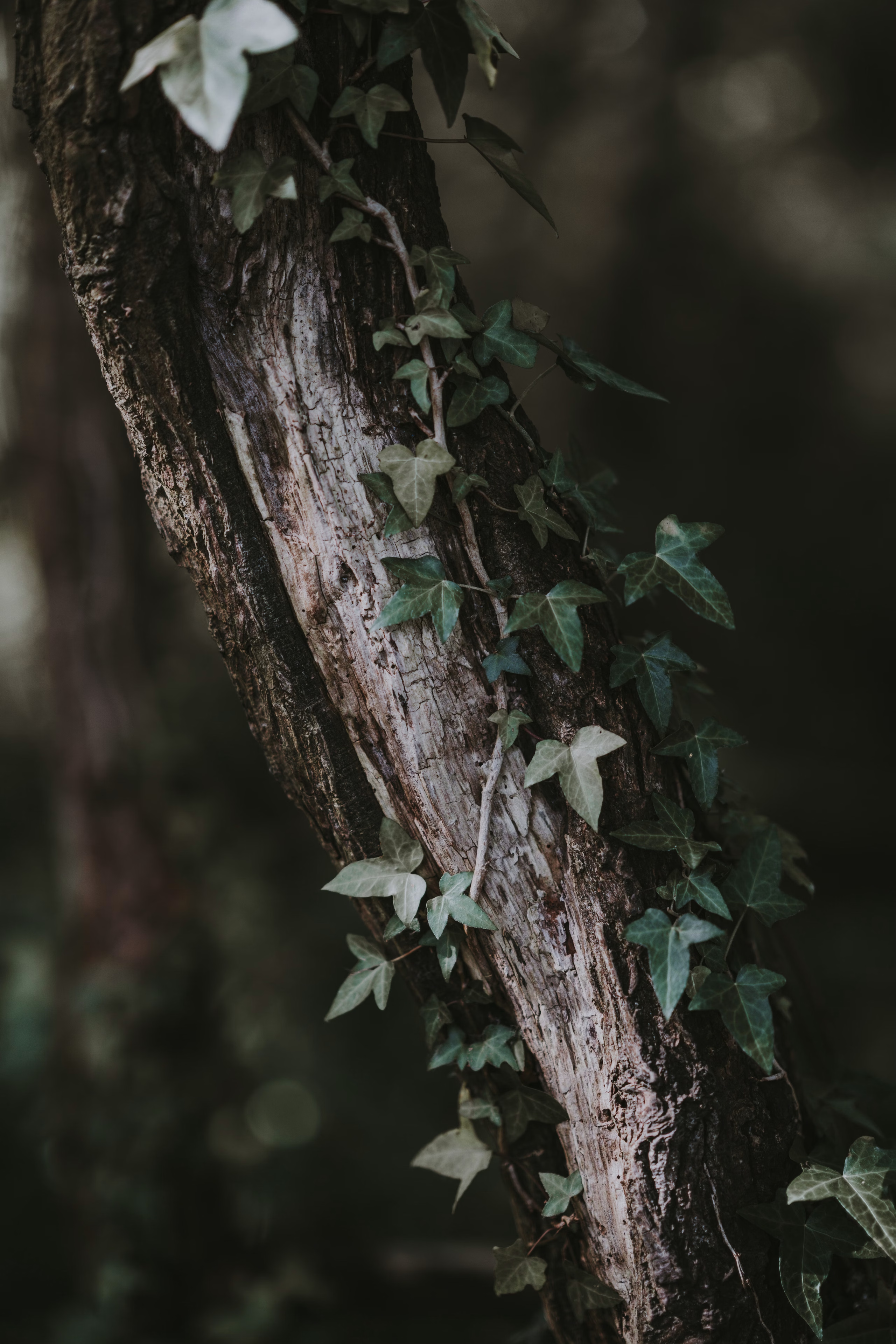
English ivy brings instant cottage charm with its trails of dark green leaves. Indoors it shines in hanging baskets or on shelves, and in the garden it cloaks walls and ground.
Origin and natural habitat
Hedera helix is Europe's classic climber, from Sweden to the Mediterranean. A shade plant of the forest understory, it climbs trees and cliffs with tiny aerial roots — indoors it needs no help, just a shelf to cascade from.
Care
Light
Ivy is very adaptable: indirect light gives the best growth, but it also tolerates shady corners. Avoid harsh direct sun that bleaches the leaves. Variegated varieties need more light to keep their pattern.
Watering
Let the soil surface dry slightly between waterings. Ivy prefers drying out a little to standing wet — overwatering causes brownish leaves.
Soil and feeding
Ordinary potting soil with good drainage goes a long way. Feed monthly during the growing season. Prune the trails when they get too long — they branch out bushier.
Common problems
Spider mites love dry indoor air and leave silvery webbing under the leaves — mist regularly. Black-spotted leaves indicate conditions that are too damp. Dropped leaves after moving are common; give it a permanent spot.
Good to know
English ivy is one of the most studied NASA air purifiers, filtering benzene and formaldehyde among others. Note: toxic to cats and dogs.