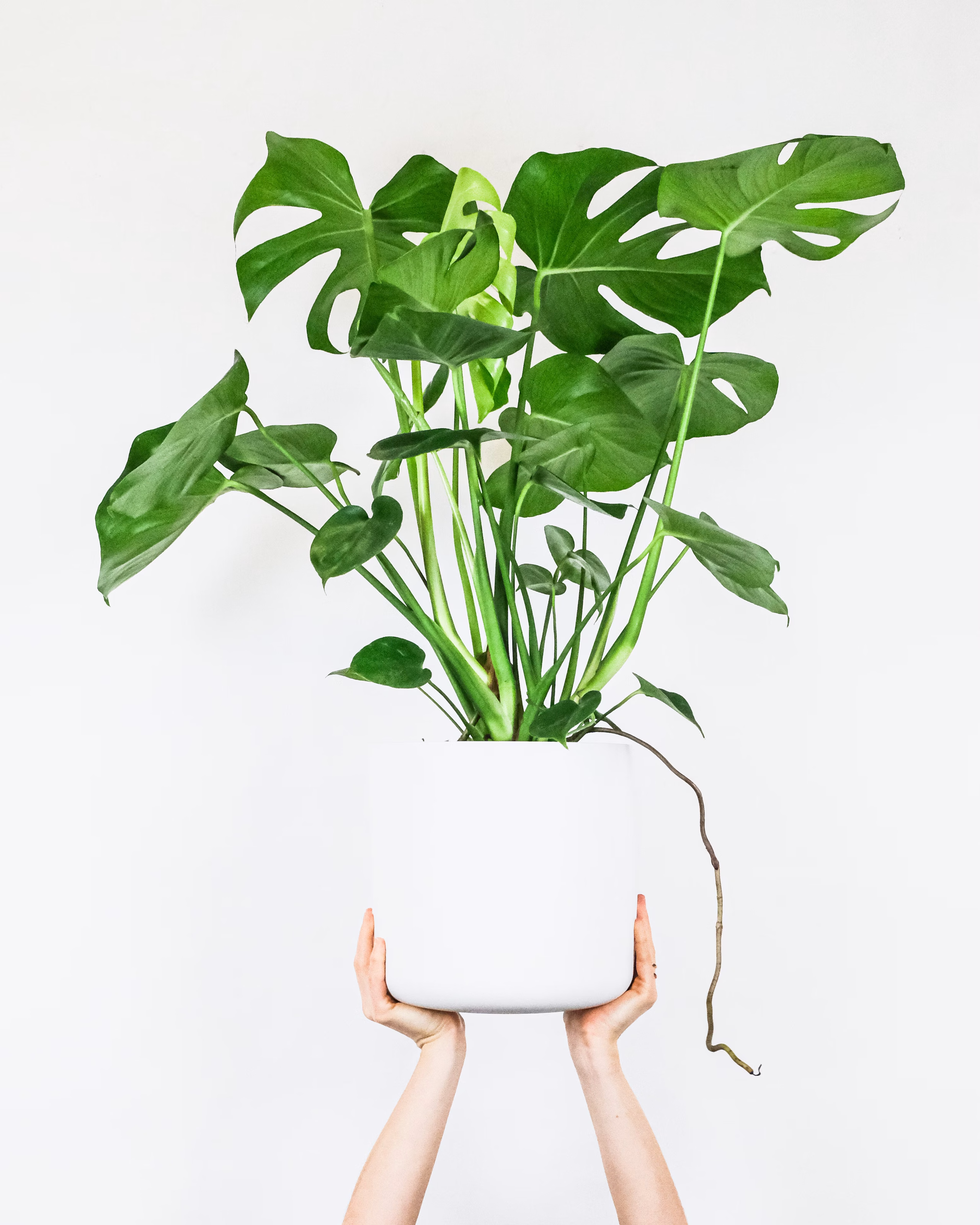
Monstera deliciosa needs no introduction — the distinctive leaves with their deep splits and natural holes have become an icon of interior design. But behind the beautiful facade hides a robust and easy-care plant that thrives in most homes.
Origin
In its natural habitat, monstera grows in the humid rainforests of Central America, from southern Mexico down to Panama. There it climbs along trees toward the light and can become enormous — leaves can reach nearly a metre in diameter in the wild. In the rainforest we also understand why monstera's leaves have their famous holes and splits. The theory is that they act as "wind breakers" helping the leaves survive tropical storms, and that they allow light to filter down to the lower parts of the plant.
Light
Monstera does best in bright to moderate indirect light. Avoid direct sun which can burn the leaves, but ensure it receives enough light to form its characteristic splits — young plants won't develop holes in their leaves if they grow in too dark a position.
Watering
Water when the top 3–5 cm of soil feels dry — typically once a week in summer and every other week in winter. Monstera is more sensitive to overwatering than underwatering, so always ensure the pot has good drainage.
Feeding
During the growing season (April–September), monstera appreciates monthly feeding with a balanced, liquid fertiliser. Do not fertilise at all during autumn and winter.
Soil & Pot
Use a well-draining, humus-rich potting mix. A blend of standard potting soil and perlite in a 3:1 ratio works well. Repotting is needed roughly every other year, or when the roots begin poking out of the drainage holes.
Common Problems
Yellow leaves are most often a sign of overwatering. Let the soil dry out properly and check that the pot drains well.
Brown tips usually indicate low humidity. Place the plant on a tray of water and pebbles, or mist the leaves with water.
Leaves without splits on an adult plant signal insufficient light. Move the plant to a brighter position.
Fun Fact
Monstera deliciosa actually produces edible fruit in its natural habitat — hence the epithet "deliciosa." The fruit is rarely known outside the tropics, but its flavour is described as a blend of pineapple and banana.