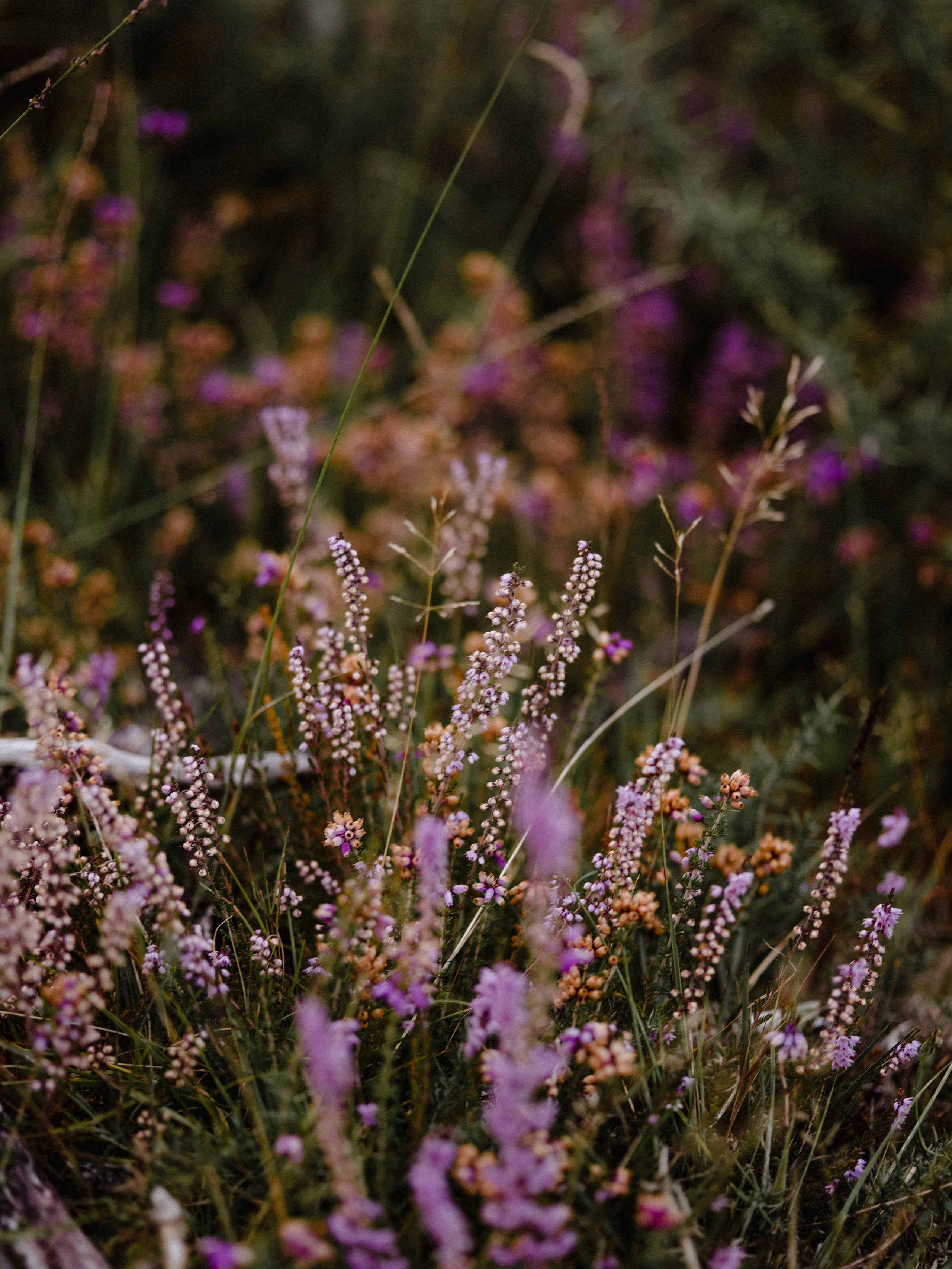
Heather is more than a garden plant — it is part of the Nordic identity. Across Scandinavian moorlands, alpine slopes, and forest edges, heather paints the landscape in purple and pink every late summer. In the garden it is an invaluable plant that provides colour when most other perennials have retreated — from July right through November and sometimes beyond.
Heather — A Note on Naming
It is common to confuse heather (Calluna vulgaris) with heath (Erica spp.), but they actually belong to different genera. Heather blooms from late summer to autumn and has leaves that sit tightly like scales. Heath typically blooms in winter or early spring. In garden centres both are often sold under the same common name.
Soil — Acid and Lean
Heather is adapted to lime-poor, acid, lean soil. Neutral or lime-rich soils are directly harmful. Plant in specialist ericaceous compost or mix heather compost with sand. pH should be between 4.5 and 6. Never use normal garden soil containing lime.
Light
Full sun gives the densest growth and most flowers. In partial shade heather survives but blooms more thinly and grows more sparsely.
Watering
Water regularly but moderately. Heather tolerates brief drought but should not stand in wet soil. During warm summers, water deeply every two weeks.
Feeding
Fertilise sparingly with a fertiliser for acid-loving plants (e.g., azalea fertiliser) once a year in spring. Too many nutrients produces loose, untidy growth.
Pruning
Trim heather lightly in spring (April), just as new growth begins to appear. Run scissors through the flower stalks — do not cut down into the old woody stem. Regular light trimming keeps plants compact and long-lived.
Heather in Naturalistic Plantings
Heather is excellent in rock gardens, on slopes, and in naturalistic plantings. It works well as ground cover under conifers and alongside other acid-loving plants such as blueberry, rhododendron, and azalea.
Common Problems
Yellowing and dying is almost always due to the wrong soil type (too lime-rich) or standing water. Check pH and drainage.
Poor flowering usually results from too little sun or neglected pruning.
Facts
Heather is an important bee plant — heather honey is dark-coloured with a strong, slightly bitter taste and is considered a delicacy in Scandinavia and Scotland. The Scottish highland whisky tradition has deep roots in the heather moors, and heather is Scotland's national symbol. In Scandinavia, heather moorlands are a nature conservation interest, and heather moors are deliberately kept open through burning and grazing.