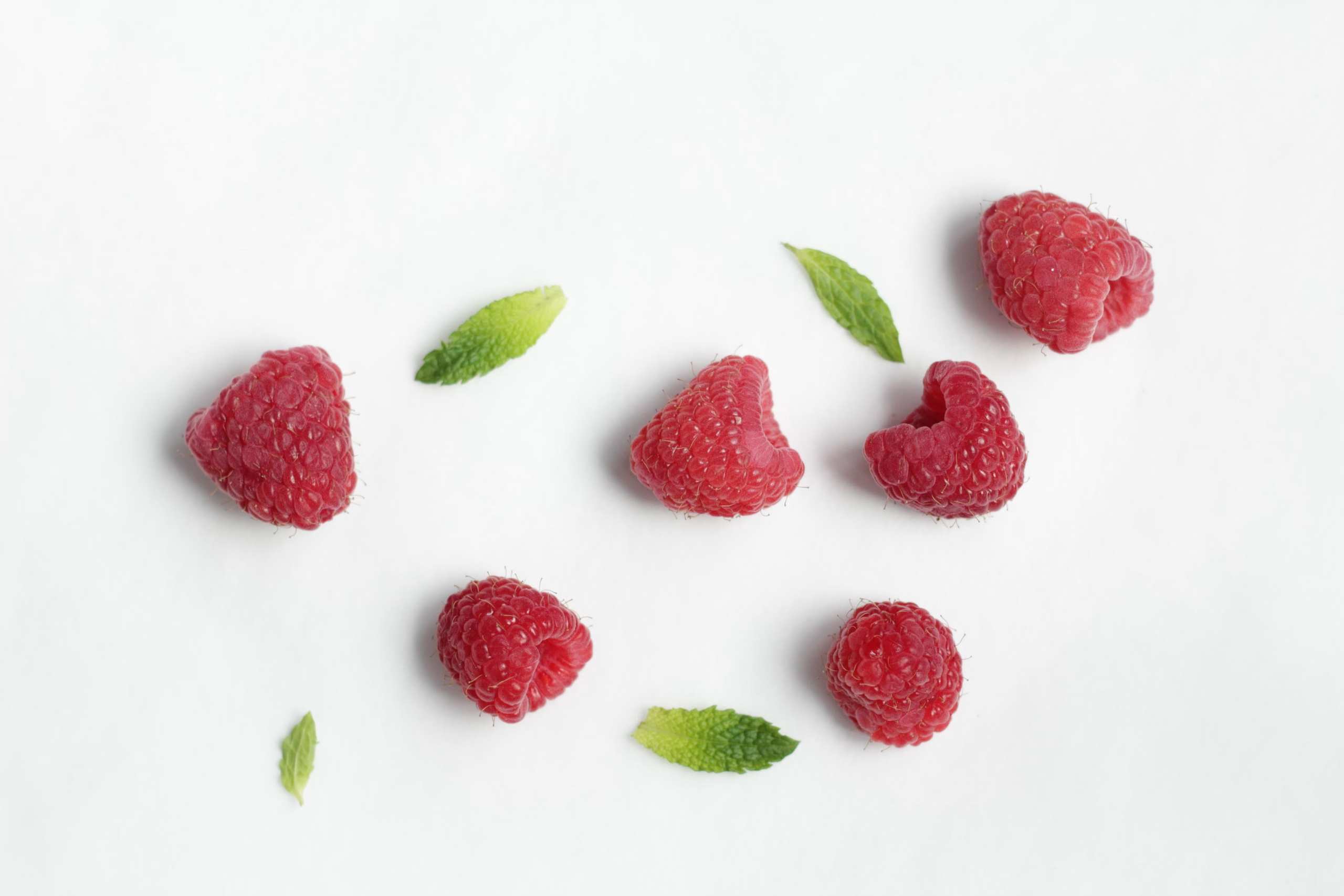
Raspberry is perhaps the easiest berry to grow in Sweden: hardy, self-sufficient and generous. Once planted it spreads by root suckers and crops for twenty years.
Origin and natural habitat
Rubus idaeus grows wild across Europe and Asia and has been foraged in Sweden since time immemorial. The name idaeus comes from Mount Ida in Turkey, where it was gathered in antiquity.
Care
Light
Sun to partial shade — in Sweden usually full sun. Plant in a sheltered spot; canes may need support against summer winds.
Watering
Water regularly while fruit is setting; otherwise established plants cope on rainfall. Mulching with grass clippings keeps moisture in.
Soil and feeding
Rich, free-draining, mildly acidic soil (pH 5.5–6.5). Feed in spring. Prune summer-fruiting canes right after harvest; cut autumn-fruiting types to the ground in winter.
Common problems
Raspberry cane moth webs shoot tips together — cut and destroy. Grey mould in wet harvests. Spreading: raspberries run — plant with a root barrier or in a large pot.
Good to know
A single raspberry is built of many small drupelets — around a hundred per berry. Safe for cats and dogs.