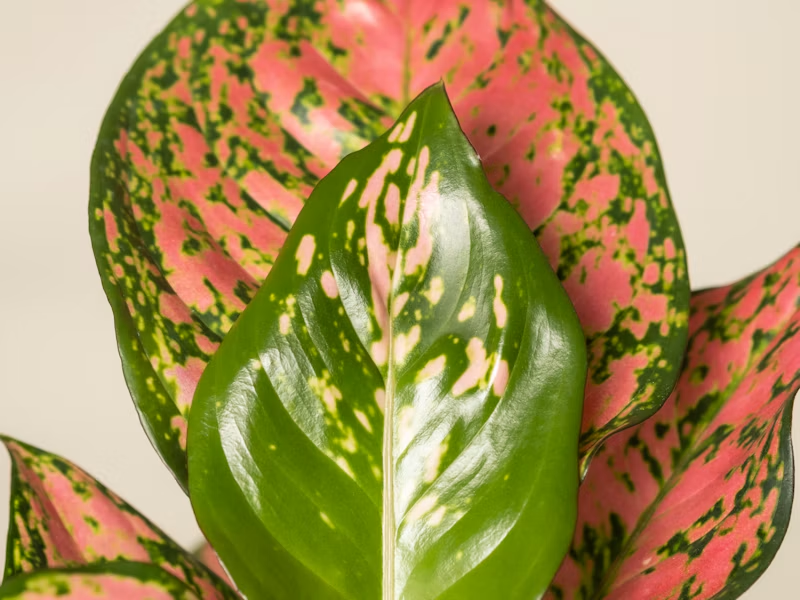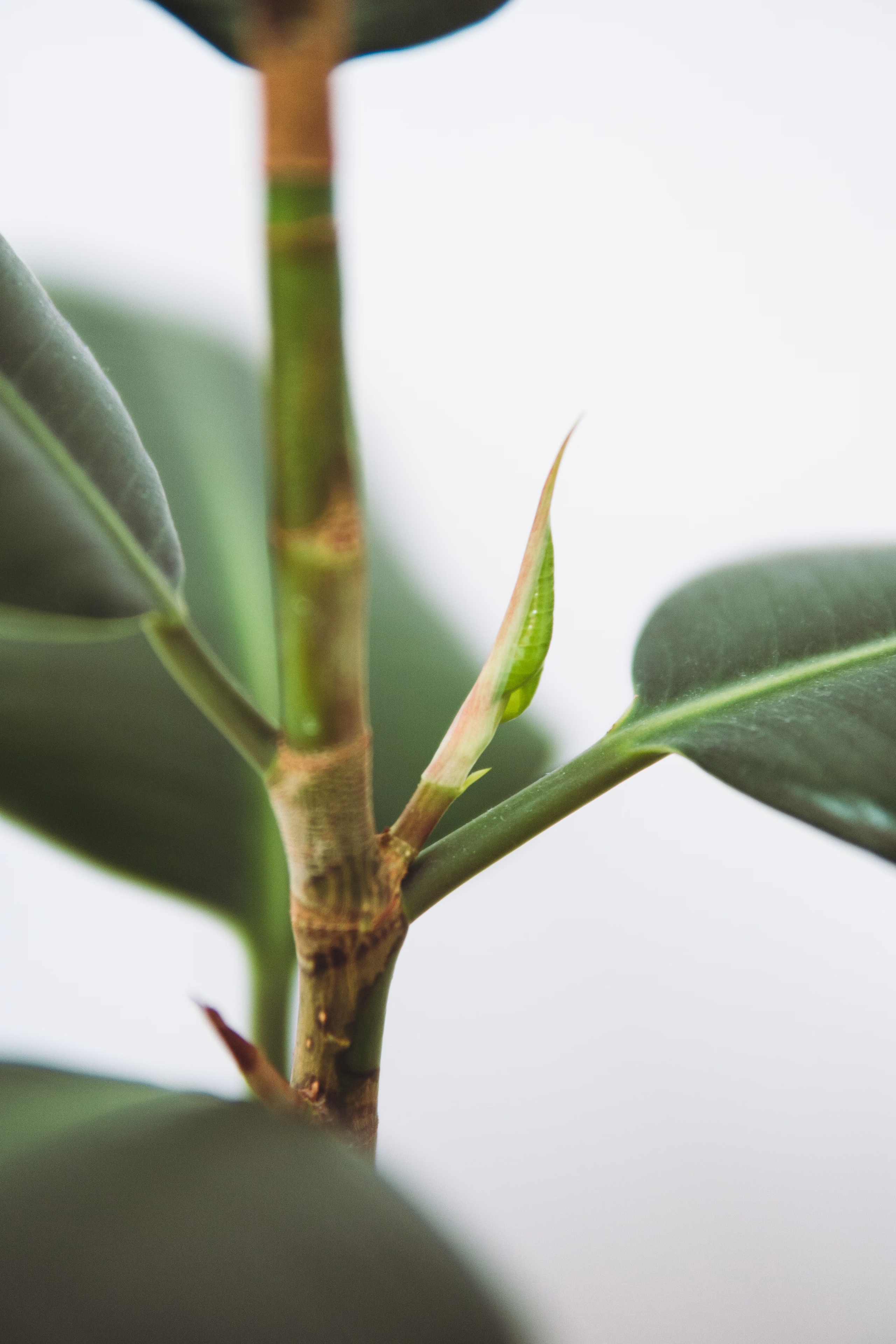
Ficus elastica — the rubber plant — has a long history as a houseplant and deserves every bit of its reputation. With its large, leathery, deep-green leaves (some varieties in burgundy, cream-white, or tricolour!) it creates an instant statement in any room. And unlike its fussy cousin the fiddle-leaf fig, the rubber plant is actually quite forgiving and adaptable.
Origin
Ficus elastica originates from the tropical forests of India, Malaysia, and Indonesia. In its natural habitat it can become an enormous tree of 30–40 metres with massive aerial roots. Indoors it stays more manageable and can become an elegant room-tree of 1–3 metres over a few years. The Latin epithet "elastica" refers to the milky latex found in the stem and leaves — the same material once used to make natural rubber.
Light
The rubber plant does best in moderate to bright indirect light. It tolerates poorer light conditions better than many tropical plants, but loses its lustre and grows more slowly without adequate light. Variegated (multi-coloured) varieties need more light to retain their colours. Avoid direct sun, which can bleach and burn the leaves.
Watering
Let the top 3–5 cm of soil dry out between waterings. Feel the soil — not moist, but not powder-dry either. In summer you may need to water every one to two weeks; in winter every two to three weeks is appropriate.
Care tip: Wipe the leaves with a damp cloth regularly. Dust blocks light absorption and makes leaves dull and heavy.
Fertilising
Fertilise monthly during spring and summer with a balanced liquid fertiliser. Skip fertilising in autumn and winter.
Popular Varieties
- 'Robusta' — classic dark green, robust and reliable
- 'Burgundy' — deep purple to almost black leaves — dramatic and beautiful
- 'Tineke' — green, cream-white, and pink patterned leaves
- 'Ruby' — red, pink, and green tricolour — a vibrant colour explosion
- 'Abidjan' — dark burgundy with olive-green new growth
Propagation
Propagate with cuttings in water or soil, or by air layering to create a large, rooted plant directly from an existing branch. The latex in the cut end can irritate skin and eyes — use gloves.
Common Problems
- Leaf drop: Stress from being moved, cold air, or drying out — choose a spot and leave the plant in peace
- Brown leaf edges: Dry air, water shortage, or fluoride in tap water
- Yellow leaves: Overwatering or poor drainage
Warning: All parts of Ficus elastica contain a milky-white latex that is toxic to pets and can irritate skin and mucous membranes.