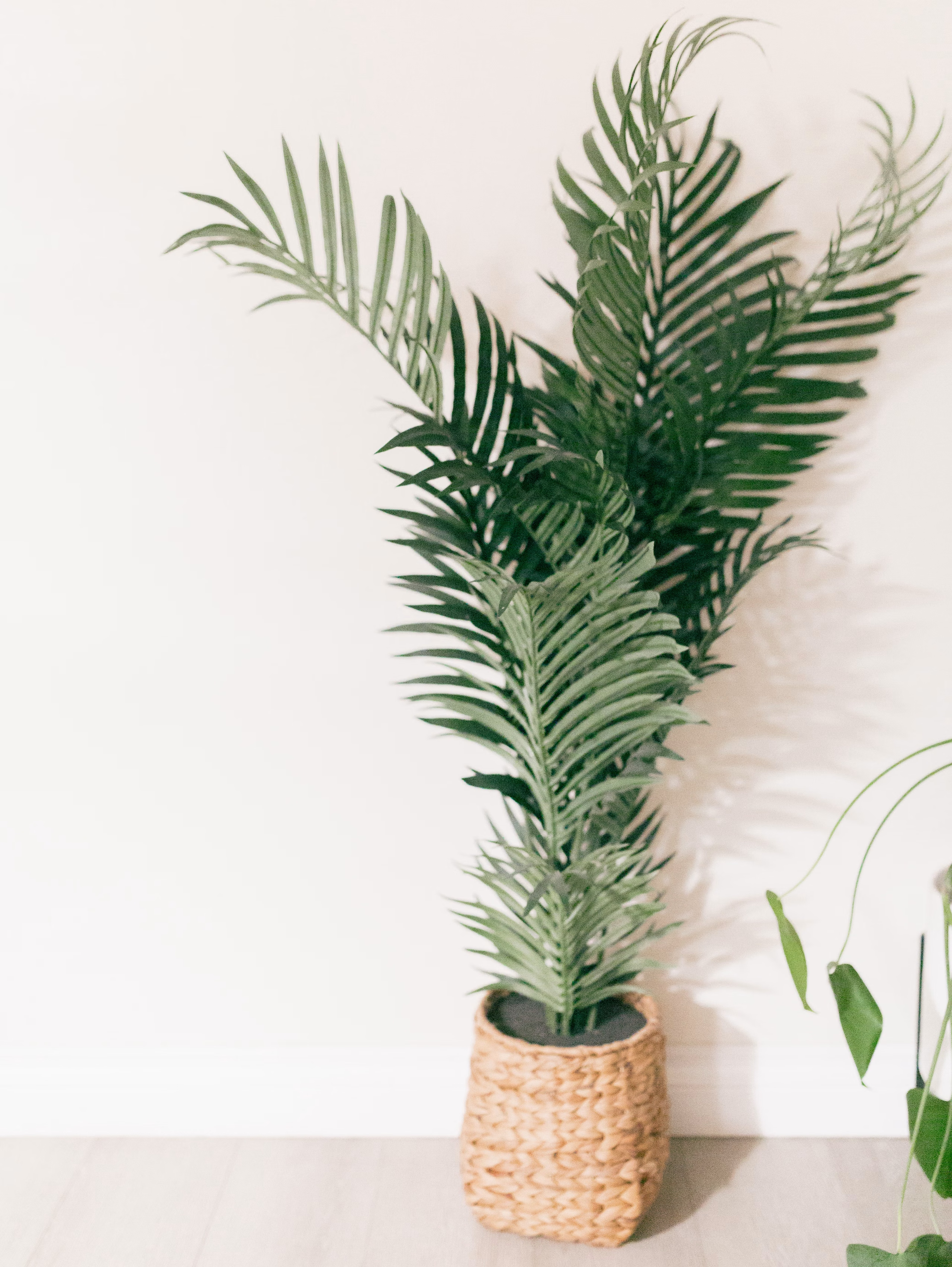
The golden cane palm — also known as the areca palm or bamboo palm — is one of the most air-purifying houseplants according to NASA's well-known study. With its golden-yellow stems and elegant, arching palm fronds, it creates an immediate tropical atmosphere, and its ability to transpire large amounts of water makes it a natural humidifier.
Origin
Dypsis lutescens originates from the lowland forests of Madagascar, where it grows in dense groups along waterways and in coastal forests. In its natural environment it can reach up to 9 metres; indoors it typically stays at 100–200 cm, making it perfect as a focal point in corners and bright living rooms. The species is classified as Vulnerable on the IUCN Red List due to habitat destruction in Madagascar — another reason to cherish it in cultivated form.
Light
The golden cane palm needs plenty of bright light without direct sun. Place it near a south- or west-facing window with lightly filtered light — for example behind a thin curtain. Insufficient light makes the fronds pale green and the plant weak.
Watering
Keep the soil evenly moist during the growing season. Water when the top 2–3 cm begin to dry out. Reduce watering in winter. Preferably use low-mineral water — the golden cane palm may react to hard tap water with brown leaf tips.
Humidity — The Key Factor
The golden cane palm is sensitive to dry indoor air, especially during the heating season. Set up a humidifier, mist the fronds daily with room-temperature water, or place the pot on a tray of water and pebbles. Humidity above 50 % gives the best results.
Temperature
Keep temperature between 16–27 °C. Avoid cold drafts and sudden temperature drops. The golden cane palm does not tolerate temperatures below 10 °C.
Fertilising
Fertilise once a month from April to September with a nutrient solution balanced for palms or tropical plants. Too much fertiliser causes brown leaf tips.
Air Purification
In NASA's Clean Air Study, the golden cane palm ranked as one of the most effective plant air purifiers. It absorbs substances such as formaldehyde, xylene, and toluene, and also transpires large amounts of moisture — up to a litre of water per day under the right conditions.
Common Problems
Brown leaf tips are nearly universal for indoor palms and usually result from dry air, hard water, or fluoride sensitivity. Trim brown tips with scissors. The problem rarely disappears entirely, but lessens with increased humidity and soft water.
Spider mites are the most common pest — fine webbing on the underside of fronds reveals an infestation. Mist fronds with water regularly as a preventive measure, and treat with insecticidal soap if attacked.