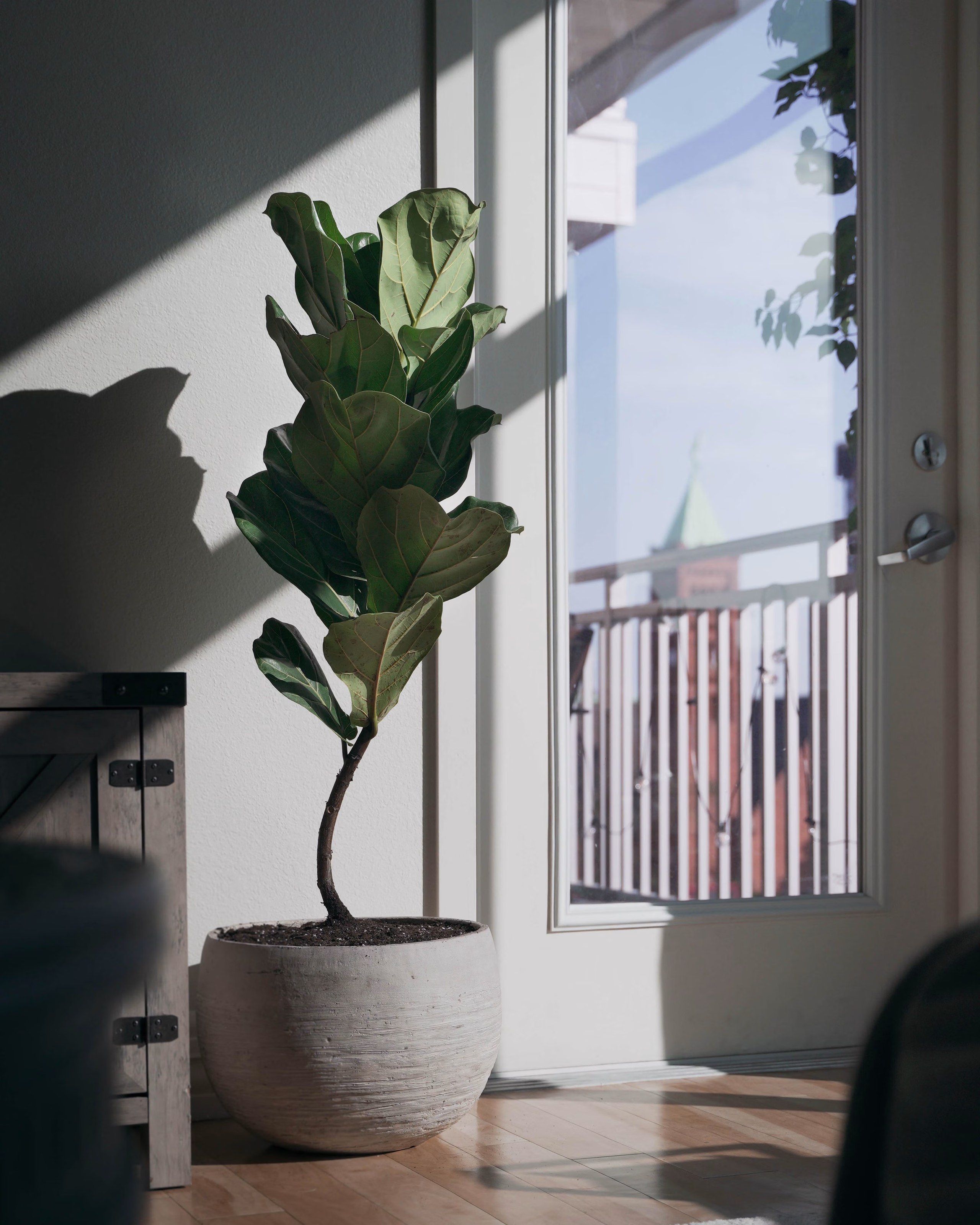
The fiddle-leaf fig is the interior design world's great star — its large, sculptural leaves shaped like a violin, with their deep green, crinkled surface, are instantly recognisable from countless Scandinavian homes, hotel lobbies, and cafés. It is beautiful, dramatic, and requires a little more attention than many other houseplants — but the reward is enormous.
Origin
Ficus lyrata originates from the tropical rainforests of Central Africa — Cameroon, Sierra Leone, Nigeria. In its natural habitat it can become a large tree, 15–20 metres tall, with strong branches and metre-wide leaves. Indoors it remains manageable but can still reach 2–3 metres with proper care.
Light — The Most Important Factor
The fiddle-leaf fig needs bright, indirect light to thrive. Place it near a south- or west-facing window where it receives plenty of light without being hit by direct rays. Insufficient light is the most common reason fiddle-leaf figs drop leaves and refuse to grow.
Avoid moving the plant frequently — it is extremely sensitive to location changes and often drops leaves in response to a new environment. Choose the right spot immediately and leave it there.
Watering
Water when the top 3–5 cm of the soil surface has dried out. Consistency is key: too little water and the leaves droop and fall; too much and the roots rot. During summer roughly every two weeks, less often in winter. Use room-temperature water and avoid watering directly onto the leaves.
Humidity
As a tropical tree, the fiddle-leaf fig appreciates humidity above 50 %. Dry winter air can lead to brown leaf edges. Place the plant on a tray of pebbles and water, or use a nearby humidifier.
Soil & Repotting
Choose a nutrient-rich, well-draining potting mix. Repot every two to three years, ideally in spring, into a pot 5–7 cm larger in diameter. The fiddle-leaf fig likes to be slightly pot-bound but needs regular soil renewal.
Propagation
Fiddle-leaf fig can be propagated with stem cuttings. Cut a stem with at least a couple of leaves, dip the cut end in rooting hormone, and plant in moist, well-draining soil. Keep moist and warm (at least 20 °C) until roots form — this takes 4–8 weeks.
Common Problems
Leaf drop — the most common and frustrating challenge. Causes: location changes, drafts, insufficient light, uneven watering, or a large temperature change. Give the plant time to adjust — if conditions are right, it usually stabilises.
Brown spots — can result from direct sun, fluoride in tap water, or dry air.
Yellow leaves — usually overwatering or insufficient light.
Tip: Buy a healthy, large plant from a reputable nursery rather than a cheap shop specimen — a strong plant handles the move to your home much better.