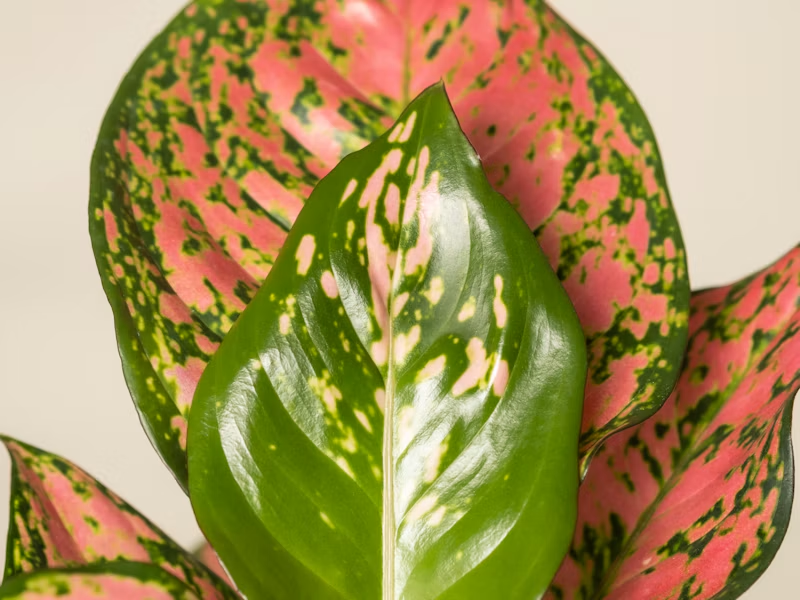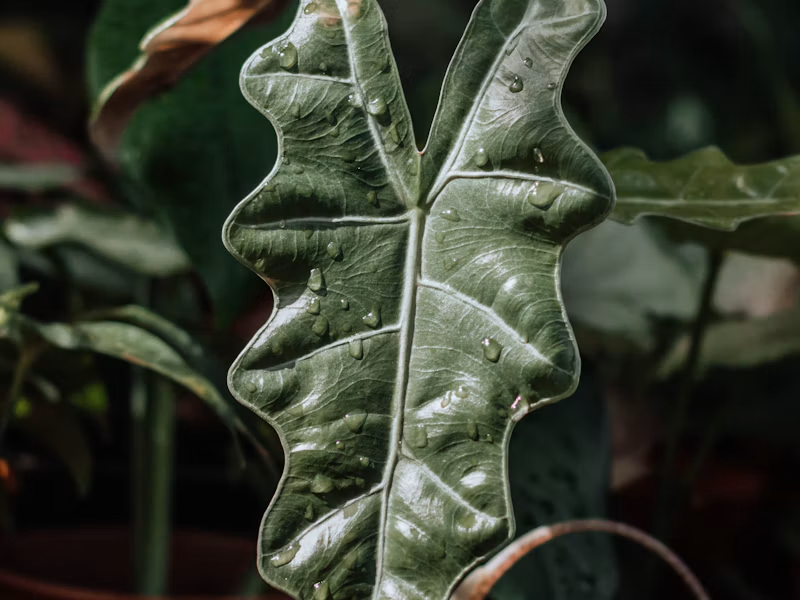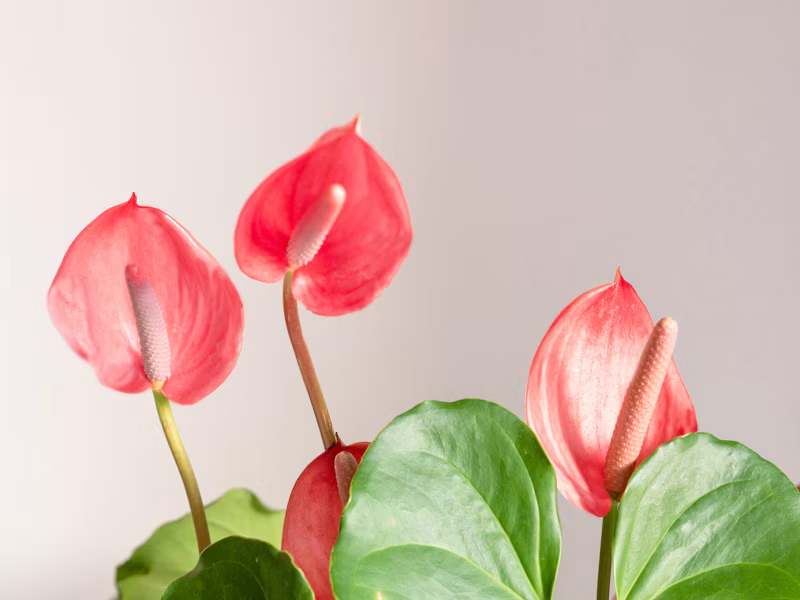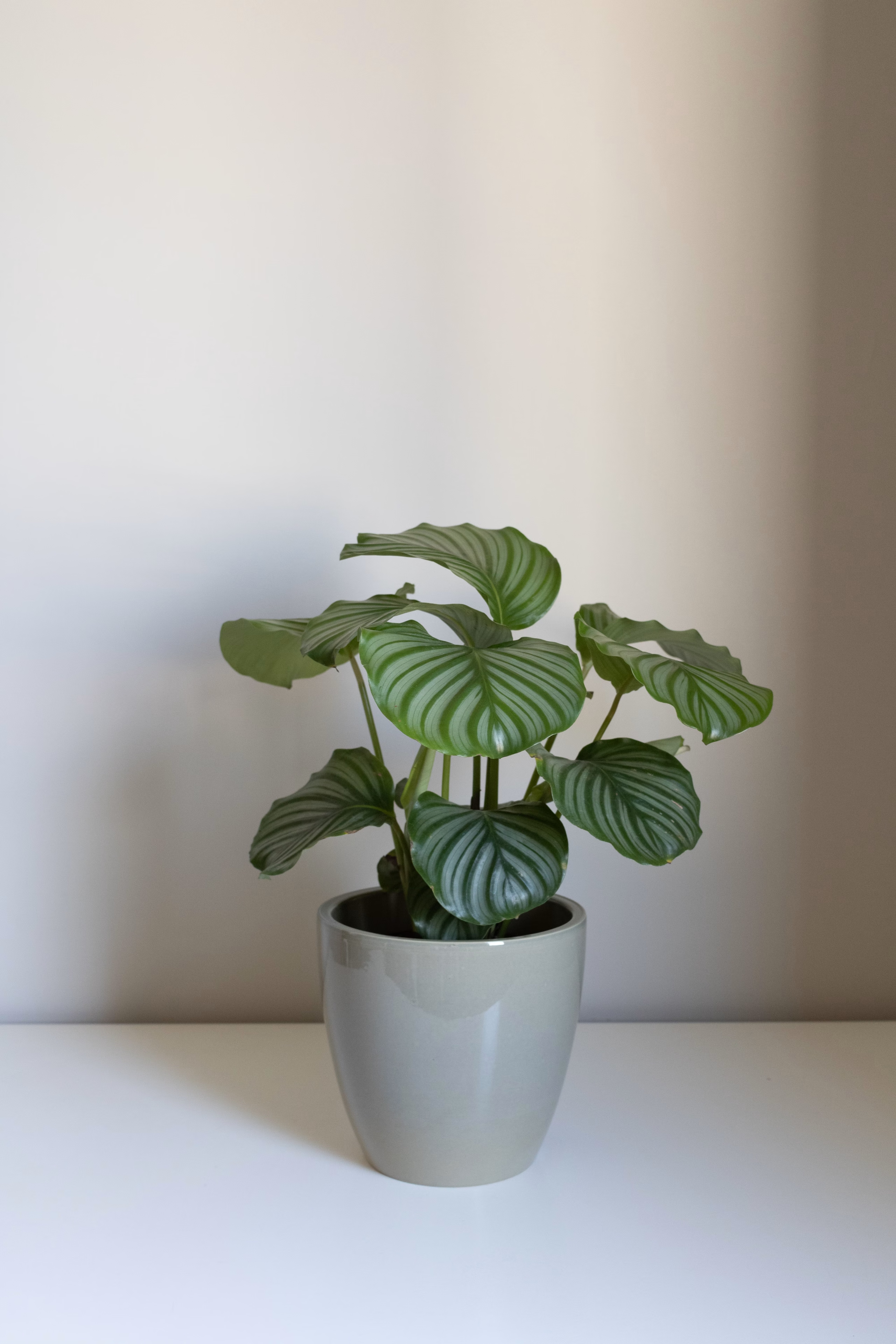
Few plants inspire as much admiration as a well-tended calathea. The round, broad leaves with their intricate patterns — silver-banded, zebra-striped, velvety purple undersides — are one of nature's most spectacular visual achievements. Calathea is not the easiest plant to keep, but given the right environment it rewards its owner with a beauty that surpasses most.
Origin
Calatheas are natural inhabitants of the deepest parts of tropical rainforests in South and Central America — Brazil, Ecuador, Colombia. There they grow on the forest floor under a dense canopy, in constant high humidity, diffuse light, and steady warmth. These are exactly the conditions we need to recreate indoors.
Night Movement
One of calathea's most fascinating features is its nyctinastic movement — the leaves fold upward at night (like hands in prayer, hence the nickname "prayer plant") and open again in the morning toward the light. It's a living, moving presence in the home.
Light
Calathea needs moderate, indirect light — no direct sun. It does best near a north- or east-facing window, or further into a well-lit room. Direct sun quickly burns the leaves and bleaches the patterning.
Watering
Keep the soil evenly moist but never soggy. Water when the top 2 cm of the surface has dried out. Calathea is sensitive to minerals in tap water — calcium, fluoride, and chlorine can cause brown leaf edges and tips. Use distilled water, rainwater, or tap water left open for 24 hours (chlorine evaporates).
Humidity — The Critical Requirement
Calathea needs high humidity, ideally 60 % or more. Dry indoor air in winter is the most common problem. Solutions include placing the plant on a tray of pebbles and water, using a nearby humidifier, grouping it with other moisture-loving plants, or positioning it in a bathroom or kitchen with natural humidity.
Temperature
Calathea thrives at 18–27 °C and cannot tolerate temperatures below 15 °C. Avoid drafts, cold windows, and placement near air-conditioning units.
Popular Varieties
- Calathea orbifolia — round, silver-striped leaves; the most popular and slightly more tolerant
- Calathea zebrina — bold green and yellow stripes
- Calathea medallion — dark green leaves with a rose pattern and purple underside
- Calathea ornata — narrow pink and white lines on dark green leaves — truly dramatic
- Calathea lancifolia — elongated leaves with a zigzag pattern (rattlesnake plant)
Common Problems
- Rolled leaves — classic sign of dry air or underwatering
- Brown leaf edges — mineral-rich water, dry air, or cold water — switch to distilled water
- Loss of patterning — too much light; move further from the window