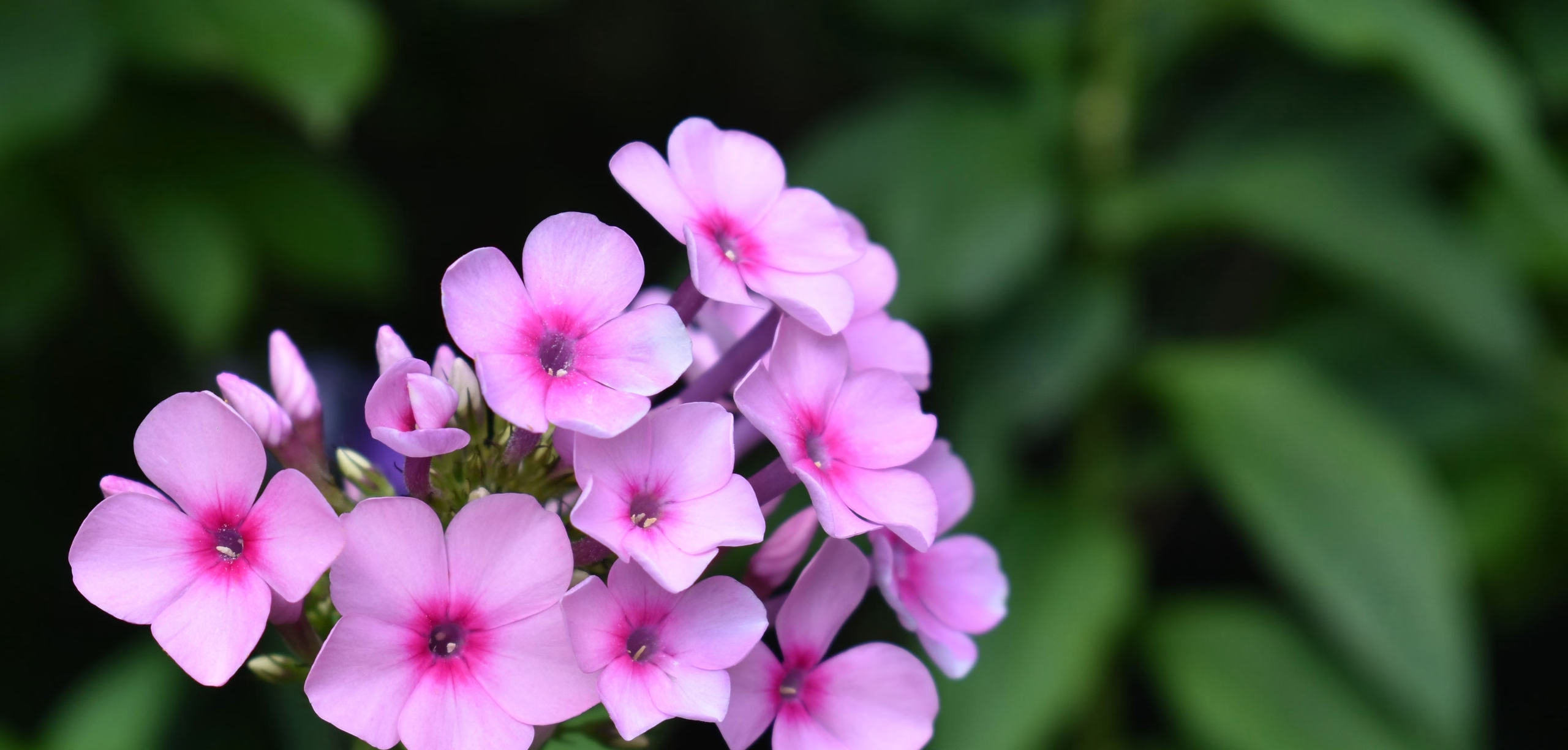
Summer phlox is a true veteran in Scandinavian gardens — a perennial that returns year after year with its large, round flower clusters and sweet, honey-like fragrance. It blooms in midsummer and into autumn, precisely when many other perennials are starting to fade, and is an invaluable contribution to the border's colour palette during late summer.
Varieties
The range of summer phlox is large. Some well-proven cultivars for Scandinavian gardens:
'David' — white, very mildew-resistant, vigorous. 'Bright Eyes' — light pink with a dark pink eye, classic and hardy. 'Starfire' — intense crimson-red, medium-height. 'Blue Paradise' — blue-lilac, richly fragrant, sought-after colour. 'Orange Perfection' — salmon-orange, unusual and beautiful.
Light
Phlox thrives best in full sun to light partial shade. Full sun gives the strongest flowering, but some protection from hot midday sun can reduce stress in dry summers.
Soil
Well-draining, humus-rich, and moisture-retentive soil. Phlox doesn't do well in dry, sandy, or heavy clay soil. Mix in plenty of compost at planting time.
Watering
Water regularly and evenly — phlox likes moist soil but should not stand in waterlogged ground. Drought leads to powdery mildew. Water at the root, not onto the leaves.
Feeding
Fertilise with an all-purpose fertiliser in May and with a flowering fertiliser in June–July. Well-fed phlox blooms more prolifically and is more resistant to powdery mildew.
Thinning
Thin out the shoots to 5–7 stems per plant in spring. Better air circulation significantly reduces the risk of powdery mildew and gives stronger flowers.
Division
Divide the clumps every three to four years in autumn or early spring. Keep the outer, young shoots and discard the old, woody central crown.
Common Problems
Powdery mildew is phlox's great challenge — white coatings on leaves in dry, warm weather. Choose resistant cultivars like 'David', thin the shoots, and avoid evening watering. Biological treatment with a sodium bicarbonate solution can help.
Spider mites can attack in hot, dry weather. Treat with insecticidal soap or ensure sufficient watering.
Fun Fact
The name phlox comes from the Greek word phlox (flame) — a name referring to the flowers' intense, fiery colours. Phlox is originally a North American plant and was one of the most popular ornamental plants among indigenous peoples of eastern North America long before Europeans arrived.