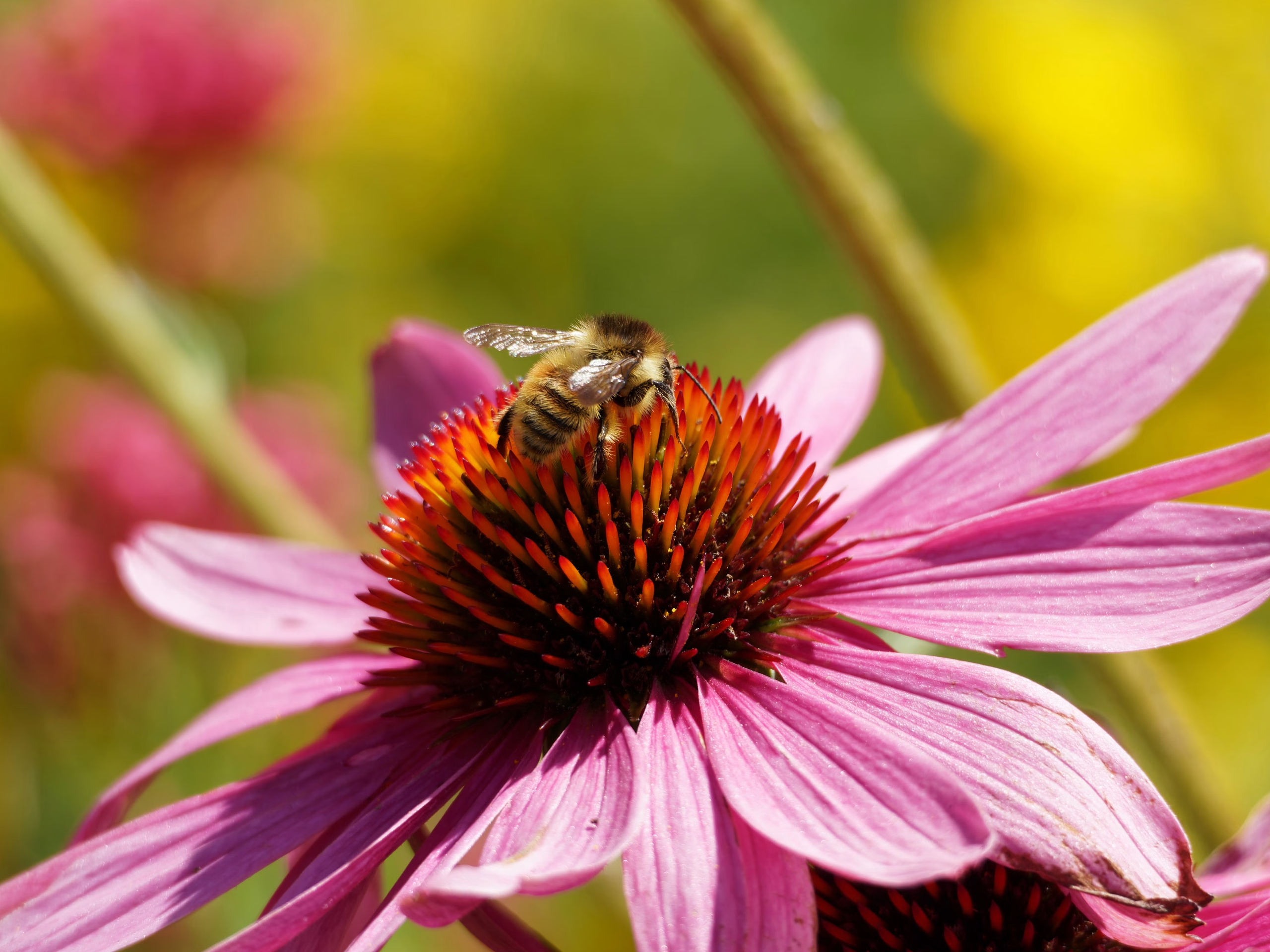
Coneflower is late to wake in spring but then unstoppable: flowering for eight weeks, drought-tolerant, excellent cut, and fine as a winter silhouette with frost on the cones.
Origin and natural habitat
Echinacea purpurea grows on prairies and open woodland in the central and eastern United States. Among North American Indigenous peoples it is one of the most used medicinal plants.
Care
Light
Full sun gives sturdy stems and the most flowers. It will grow in light shade but taller and looser.
Watering
Water during the first year; after that coneflower copes with Swedish summer drought unaided. Its deep roots make it tough.
Soil and feeding
Ordinary garden soil with good drainage. Feed sparingly — rich soil gives floppy growth. Divide every four years. Leave seedheads as winter bird food.
Common problems
Floppy growth from overfeeding or shade — replant in sun. Notched leaves: Japanese beetles can chew foliage — pick them off. Frost heave: newly planted crowns can lift — firm them back in spring.
Good to know
The name Echinacea comes from the Greek echinos — "hedgehog" — after the spiky cone. The flowers are magnets for bees and butterflies. Safe for cats and dogs.