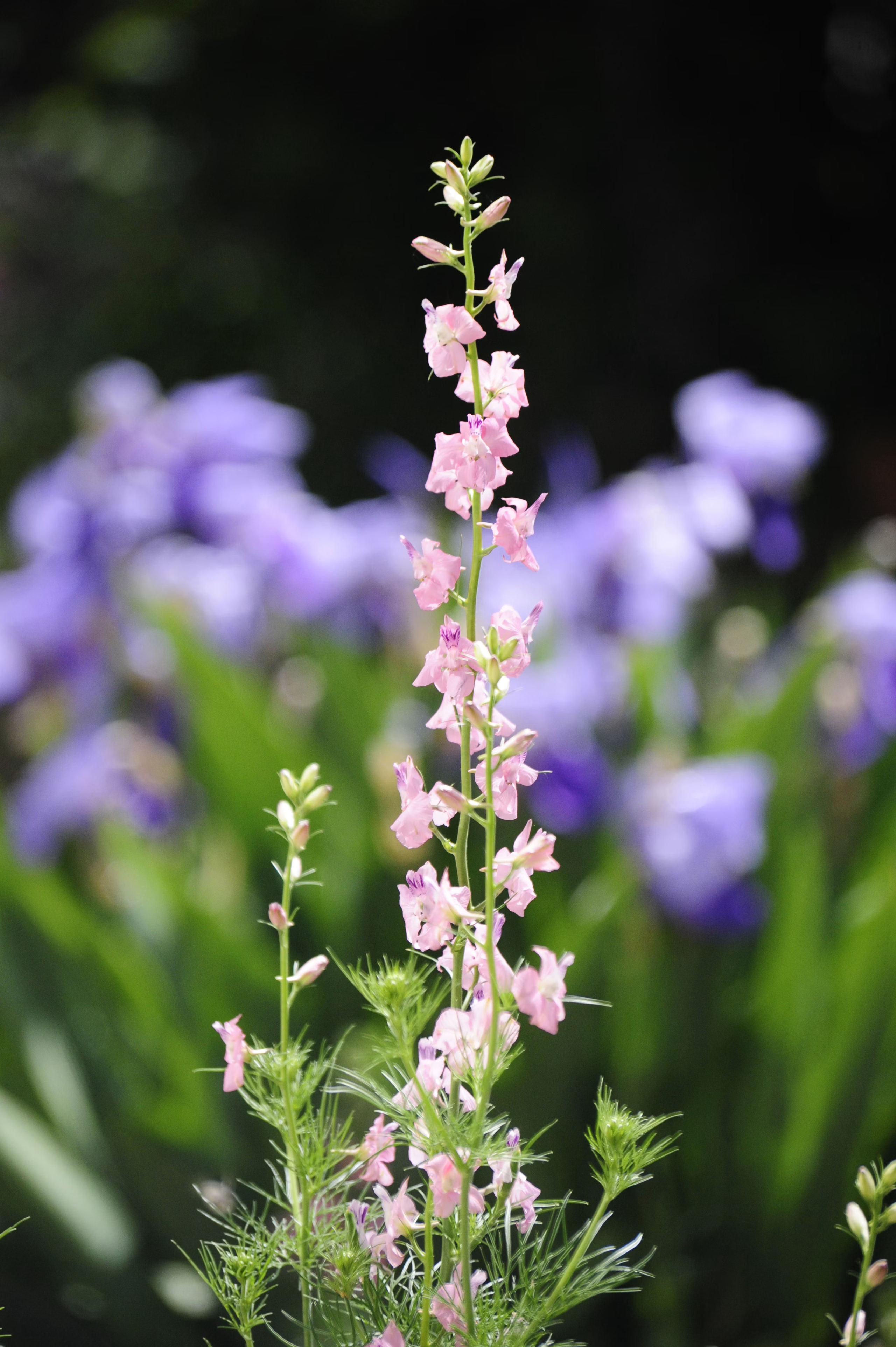
Delphiniums are one of the summer garden's most impressive perennials. The 1–2 metre tall flower spikes covered in blue-violet, sky-blue, lavender-pink, or white flowers create a vertical drama that few other plants can match. They are the centrepiece of the classic English cottage garden and equally at home in traditional Scandinavian farmhouse borders.
Varieties
Pacific Giants are the most common delphiniums in garden centres — large, double flowers in intense colours. They are short-lived (2–3 years) but give a magnificent effect. Belladonna group (D. × belladonna) — more branched, elegant plants with looser flower spikes. More hardy and longer-lived. Elatum hybrids are the classic tall hybrids with their characteristic dense flower spikes.
Light & Wind Protection
Delphinium needs full sun. Plant against a protected wall or hedge, or provide strong stakes — the tall stems break easily in strong wind.
Soil
Deep, rich, well-draining, and preferably neutral to slightly alkaline soil. Delphinium loves lime — unlike lupines and rhododendron. Improve generously with compost at planting time.
Watering
Water regularly and deeply during flowering. Delphinium has deep roots and tolerates shorter dry spells once established, but flowers less well without regular watering.
Feeding
Fertilise generously with an all-purpose fertiliser or horn meal in spring, and with a flowering fertiliser during blooming. Delphinium is a heavy feeder.
Staking — Obligatory
Insert robust stakes (bamboo or steel rods) early in the season — before the plant needs them — and tie stems loosely with garden twine. A gust of wind can snap stems at the peak of flowering.
After Flowering
Cut the flower spikes down to about 10–15 cm after flowering in June–July. The plant usually produces new flower spikes giving a second, if somewhat weaker, bloom in September.
Overwintering
Delphinium is hardy in zones 1–3 without extra protection. In colder zones, cover the base with conifer branches.
Toxicity
All parts of delphinium are toxic and can cause serious poisoning if ingested — especially seeds and young shoots. Take care with delphiniums in gardens frequented by children and animals.
Common Problems
Powdery mildew is the most common problem and appears in dry, warm weather. Choose airy positions and avoid evening watering.
Aphids can attack young shoots in large numbers. Treat with insecticidal soap.
Short-lived plant is normal for Pacific Giants — renew regularly with seed sowing or new plants.