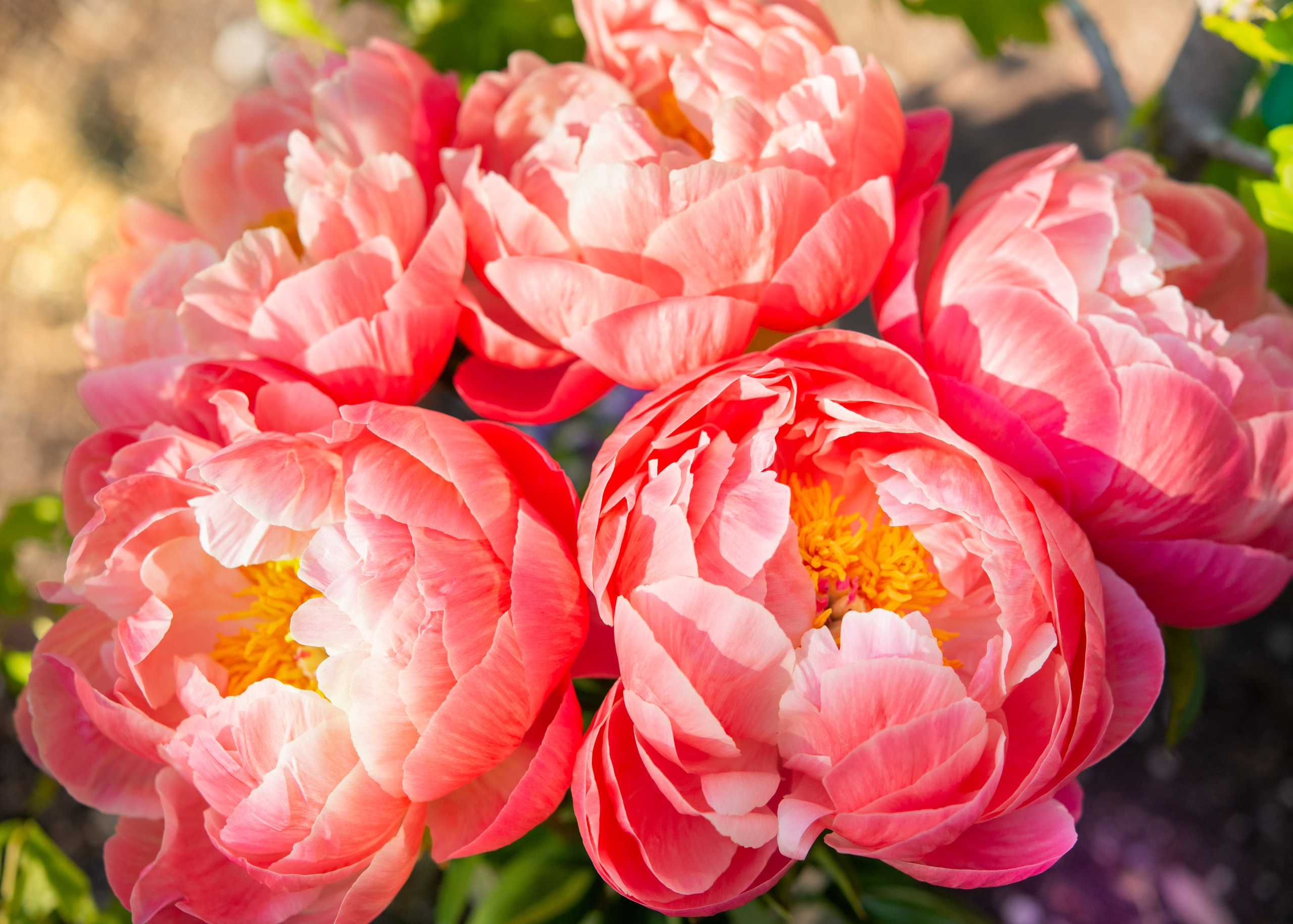
Few garden flowers inspire the same admiration as the peony's magnificent, bowl-shaped blooms in pink, red, and white. In Scandinavia, peonies flower in June, and their sweet, spiced fragrance is one of the most treasured experiences of the garden season. What makes peonies especially beloved is their hardiness and longevity — a well-placed peony can bloom for fifty years or more with minimal attention.
Varieties
Common peony (Paeonia officinalis) blooms at the end of May with single to semi-double flowers and is extremely hardy throughout Scandinavia. Chinese peony (Paeonia lactiflora) delivers the large, tightly packed double flowers we associate with classic gardens, blooming in June. Popular cultivars include 'Sarah Bernhardt' (pink), 'Festiva Maxima' (white with red flecks), and 'Karl Rosenfield' (deep crimson).
Tree peony (Paeonia suffruticosa) is woody and can reach up to 2 metres — a more sheltered position and some additional winter protection is recommended in the more northern parts of Scandinavia.
Planting
Plant peonies in autumn (September–October) or early spring. The most important factor is planting depth: the eyes (the red buds) should sit precisely 3–5 cm below the soil surface. Peonies planted too deep will not flower — this is the most common reason for failure to bloom. Choose a sunny to partially shaded position with well-draining, humus-rich soil.
Light
Full sun gives the most and strongest flowers. Partial shade is tolerated but produces fewer flowers and more risk of powdery mildew.
Watering
Peonies are relatively drought-tolerant once established. During flowering, water regularly and deeply. Avoid watering late in the evening and directly onto the leaves.
Feeding
Fertilise sparingly in spring with an all-purpose fertiliser. Too much nitrogen produces lush leafy growth at the expense of flowers.
Autumn Care
Cut the foliage down to ground level in October–November. Apply a thin layer of compost or garden straw to protect the roots during hard frost in more northerly gardens.
Common Problems
Grey mould (Botrytis paeoniae) is the most common peony problem — buds and stems turn brown and collapse. Good air circulation and removing plant material in autumn prevents it effectively.
Ants on peony buds are harmless — they visit the flowers for nectar and do not need to be controlled.
Failure to flower usually results from planting too deep, too much shade, or the plant being newly planted and needing a few years to establish.