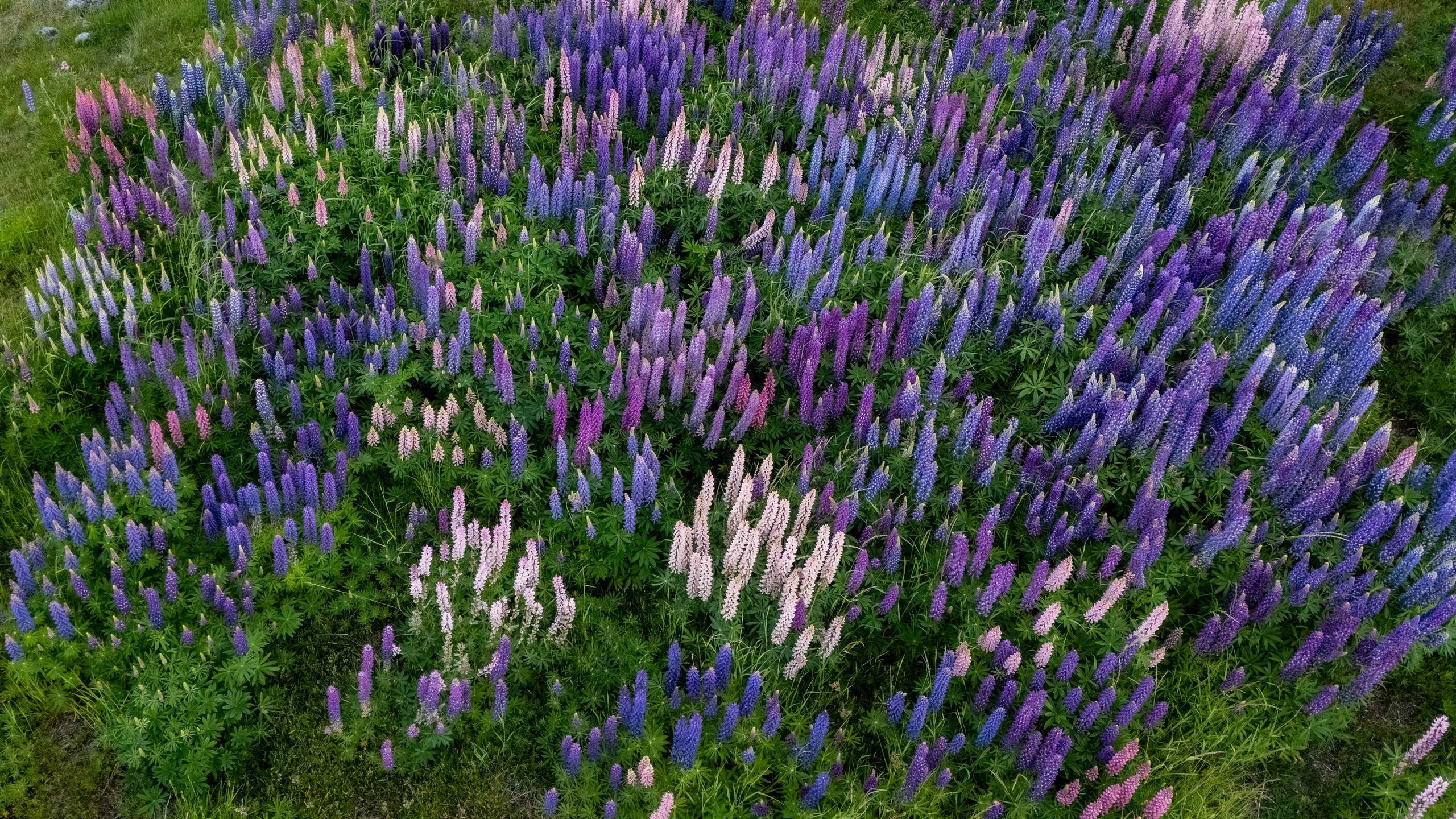
There are few more typical sights in the Scandinavian summer landscape than the tall, colourful flower spikes of lupines along roadsides, meadows, and gardens. Originally from the west coast of North America, lupine has spread so effectively in Scandinavia that it is in some areas classified as invasive — but in the garden it is an appreciated, easy-to-grow, and magnificent flower.
Hardiness & Lifespan
Lupinus polyphyllus and Russell hybrids are hardy in zones 1–4 in Scandinavia. They are short-lived perennials — typically 3–5 years — but readily self-seed if seed pods are allowed to mature. The flowers come in almost all colours: deep blue-purple, pink, red, orange, yellow, and white, often bicoloured.
Light & Soil
Lupines thrive in full sun to partial shade. They prefer light, well-draining, and slightly acid soil (pH 5.5–6.5). Avoid lime-rich soil — lupines do poorly with lime. Heavy clay soil is improved with sand and compost.
Sowing & Planting
Lupines can be sown directly in position in April–May, or started indoors in March. Scarify or soak the seeds for a day before sowing to improve germination. They form a long taproot and dislike being moved after establishment — choose the planting position with care.
Watering
Established lupines are relatively drought-tolerant and manage with normal rainfall in Scandinavia. Water more generously during dry spells and when in flower.
Feeding
Lupines are nitrogen fixers — they live in symbiosis with bacteria (Rhizobium) that bind atmospheric nitrogen in root nodules. They therefore rarely need extra nitrogen; too much nitrogen produces lush leaves but fewer flowers.
Extending the Floral Display
Cut off the first-flowering spikes immediately after the blooms fade — the plant quickly produces new side shoots with a second flowering in late summer.
Naturalisation & Ethics
Lupine is an appreciated garden plant but spreads aggressively into natural areas. Keep lupines away from meadows and natural habitats, and cut off seed pods before they burst if you want to prevent spreading. Allow self-seeding within the garden's own boundaries.
Common Problems
Aphids — especially pea aphids — can attack lupines in large numbers. Treat with insecticidal soap or a strong jet of water.
Powdery mildew appears in warm, dry weather. Choose airy positions and avoid watering late in the evening.
Short-lived plant is normal for lupines. Seed propagation is easiest — let individual seed pods ripen and collect them in September.