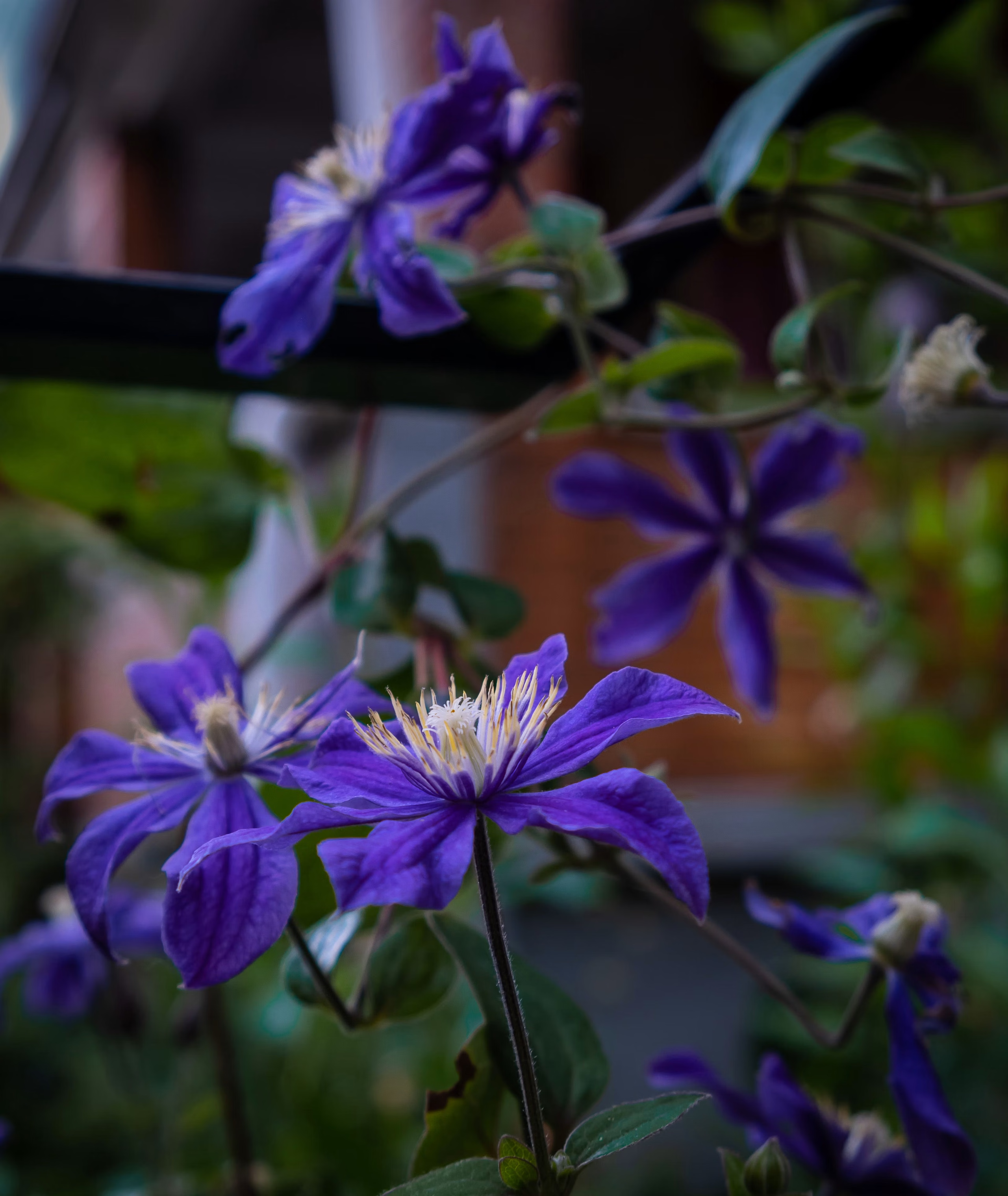
Clematis elevates any wall: elegant flowers, dense foliage, and a season that can run all summer if you pick varieties with different flowering times.
Origin and natural habitat
The Clematis genus includes roughly 300 species from across the temperate world. Garden varieties derive mostly from Chinese and Japanese species bred in Europe since the 19th century.
Care
Light
The classic rule: "heads in the sun, roots in the shade". Give the climber sun but plant low perennials or groundcover at its feet to keep roots cool.
Watering
Water regularly the first year; thereafter deeply once a week in drought. Clematis likes even moisture but drained soil.
Soil and feeding
Rich, free-draining, neutral soil. Plant 5–10 cm deeper than pot depth — it protects against clematis wilt. Prune after flowering according to group (1, 2, or 3).
Common problems
Clematis wilt makes shoots wilt suddenly — cut back to healthy wood; the plant recovers. Yellow basal leaves are normal. Weak first-year growth is expected: "first year sleeps, second year creeps, third year leaps".
Good to know
Wild clematis species are called "täppa" in Sweden — and the silky seedheads are beautiful even in winter. Safe for cats and dogs.