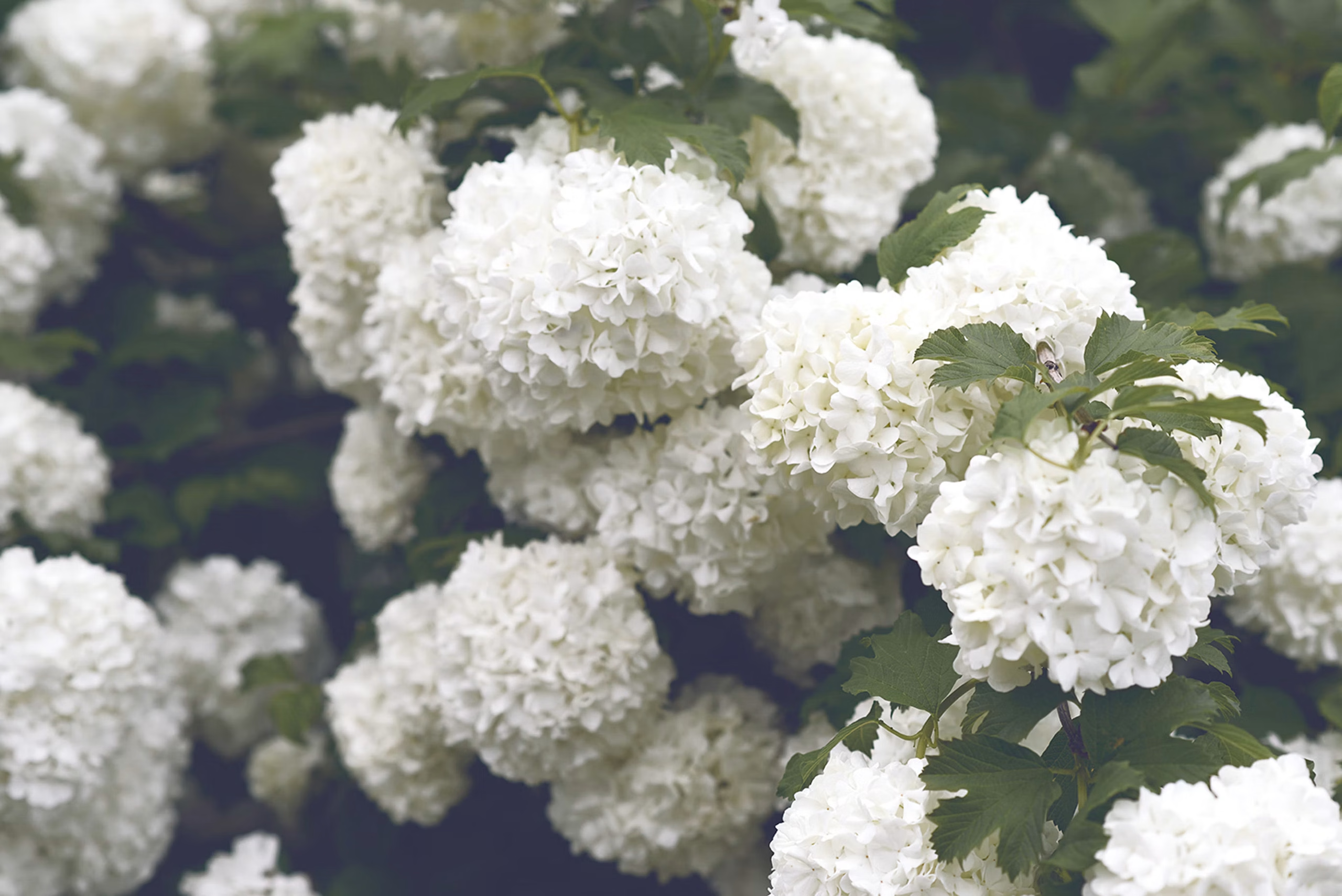
Climbing hydrangea (Hydrangea anomala subsp. petiolaris) is one of the garden's best-kept secrets. Few climbing plants are as adaptable — it tolerates both full shade and partial shade, self-attaches with aerial roots without needing wires or trellises, and each summer is covered in large, white flower clusters with a gentle almond-like fragrance. It is also hardy enough for Scandinavian conditions up to zone 4.
Appearance & Growth
Climbing hydrangea is deciduous. In winter, its decorative golden-brown, peeling bark is revealed, providing structure to the garden on its own. In spring, light-green leaves emerge, and in June–July the plant is covered in large, flat flower clusters (15–25 cm wide) with fertile central flowers surrounded by large, white sterile bracts.
Growth is slow for the first 2–3 years while the root system establishes. After that the plant surges upward and can eventually reach up to 15 metres along a facade.
Light
One of the few climbing plants that thrives in shade. Semi-shade gives the most prolific flowering, but the plant also blooms in full shade, albeit more sparsely. Avoid strongly sun-exposed south-facing walls.
Watering
Water regularly during the establishment period (2–3 years). Established plants tolerate occasional drought but flower best with even moisture. Mulch at the base during the first years.
Feeding
Fertilise with a balanced fertiliser in May. A second application in June benefits flowering. Avoid over-fertilising with nitrogen — it produces leaf growth at the expense of flowers.
Attachment & Support
Climbing hydrangea attaches with self-adhesive aerial roots directly onto walls, tree trunks, and wooden trellises — just like ivy. Give the plant a support to start climbing in the early years (e.g., a cane against the facade). Once it has gripped, it needs no further support.
Note: Avoid planting against facades with delicate rendering or wood, as the aerial roots can damage the surface over time.
Pruning
Needs minimal pruning. Remove dead or damaged branches in spring. If the plant has grown too large, cut back after flowering in July–August. Avoid pruning in autumn as it can stimulate new growth that gets frost-damaged.
Overwintering
Hardy in zones 1–4. No measures needed for established plants. Young plants (year 1–2) can be protected with a layer of mulch around the base in December.
Common Problems
Doesn't flower in the first years — completely normal. Climbing hydrangea can take 3–5 years to flower while establishing itself. Be patient.
Hanging, unattached branches on new facades — help the plant in the first few years with some string or tape until the aerial roots have gripped.