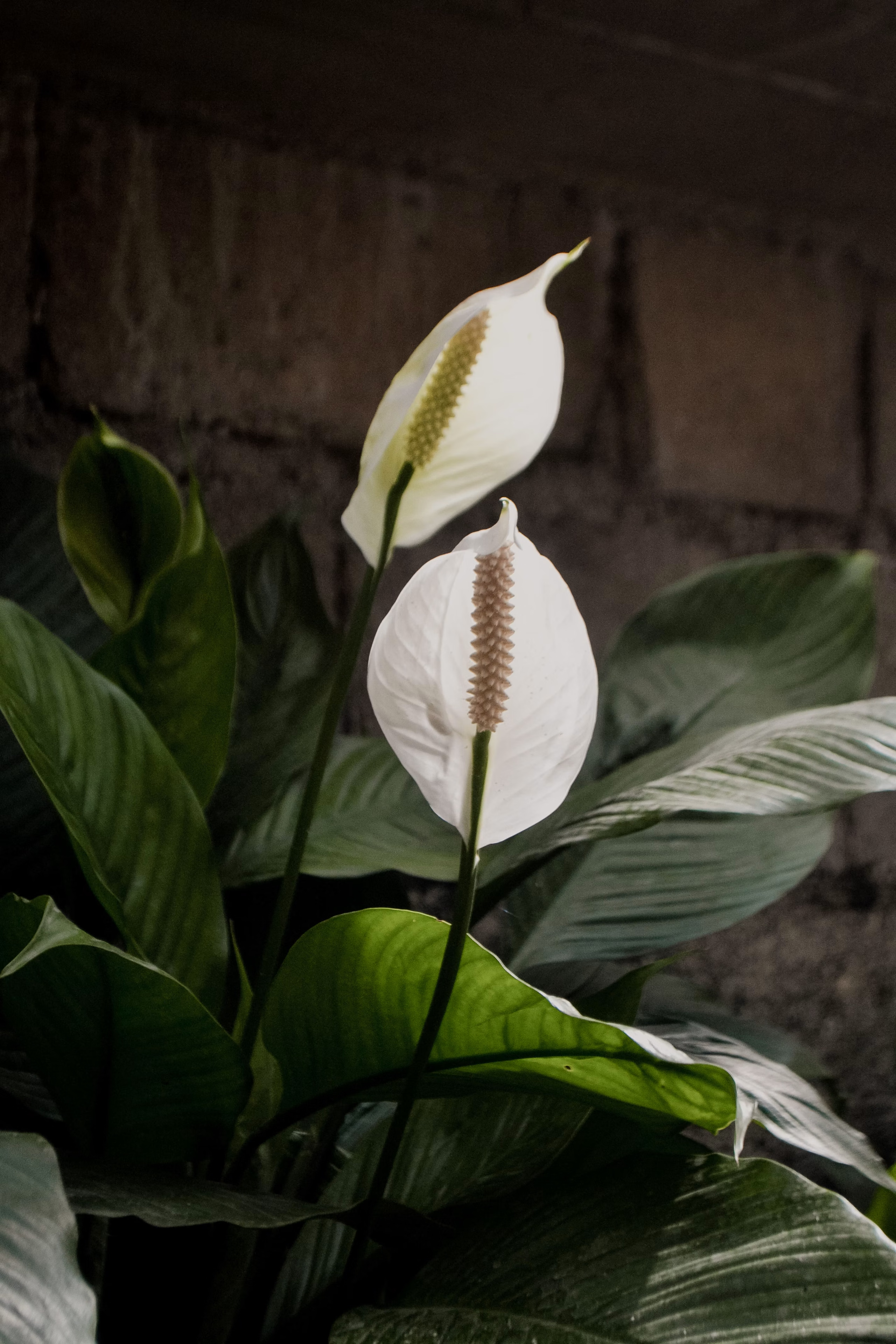
The peace lily is one of the few houseplants that flowers abundantly without requiring direct sunlight — a property that has made it beloved in homes across the world for decades. Its soft form, white spathe flowers, and evident robustness make it a perfect choice for both beginners and experienced plant enthusiasts.
Origin
The Spathiphyllum genus originates from the tropical rainforests of the Americas — from Colombia and Venezuela down to Brazil. The species has, however, spread in cultivated forms throughout Southeast Asia and is today grown at large scale for indoor use worldwide. In its natural environment, the peace lily grows on the forest floor in high humidity, strongly filtered light, and rich organic soil — conditions we should try to replicate at home.
Light
The peace lily is one of the most shade-tolerant flowering plants. It can survive in relatively dark rooms, but flowers best with moderate indirect light — near a north- or east-facing window, for example. Direct sun easily burns the delicate leaves.
Watering
Keep the soil evenly moist but never soggy. Water when the top centimetres of the surface start to dry out. The peace lily communicates clearly when thirsty — the leaves droop slightly. Try to respond before the plant reaches that stage if possible.
Use room-temperature water; peace lily is sensitive to chlorine and fluoride in tap water. Let tap water stand for a day, or use rainwater.
Humidity
As a tropical plant, the peace lily appreciates high humidity — at least 50 %. Mist the leaves regularly, use a humidifier, or place the pot on a tray of water-filled pebbles.
Fertilising & Repotting
Fertilise every four to six weeks during the growing season with a fertiliser for flowering plants. Change soil every other year or when the roots become cramped.
Air Purification
NASA's Clean Air Study from 1989 showed that the peace lily is one of the most effective plants for purifying indoor air. It absorbs benzene, formaldehyde, trichloroethylene, xylene, and ammonia — common pollutants in modern homes.
Common Problems
Brown leaf tips are caused by dry air, cold water, or mineral build-up in the soil. Increase humidity and periodically flush the root ball with clean water.
Yellow leaves can result from overwatering, too much direct sun, or the natural ageing of older leaves.
Not flowering despite good condition? Try placing the plant in a slightly cooler room (15–18 °C) for a few weeks — this can trigger blooming.