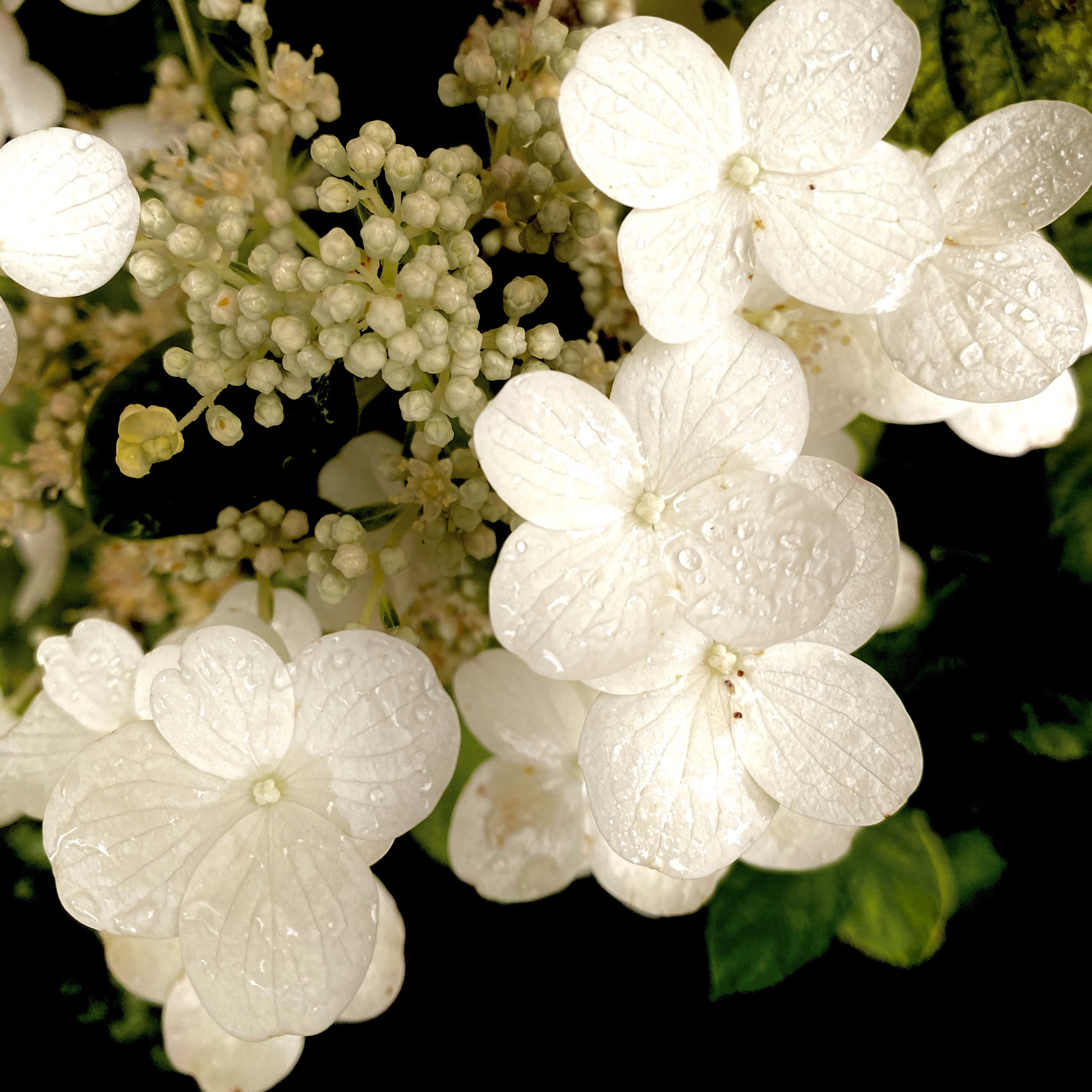
The oakleaf hydrangea (Hydrangea quercifolia) is one of the most multifaceted garden shrubs available. The large, deeply lobed leaves truly resemble oak leaves — hence the name — and provide a tropical, textured impression throughout summer. In July–September it blooms with broad, conical panicles that start white and gradually transition to powder-pink and finally brown.
But it is in autumn that oakleaf hydrangea really stands out. The leaves turn deep red-orange, purple, and bronze-red shades — autumn colour rivalling that of maple. In winter, the attractive, peeling bark in brown and beige is exposed. A true four-season shrub.
Popular Cultivars
'Snow Queen' — upright habit with large, single-flowered panicles that blush beautifully in autumn. Excellent autumn colour.
'Snowflake' — double-flowered with extra large, heavy panicles. Intense autumn colour. May need staking.
'Ruby Slippers' — compact variety (approx. 120 cm) with deep ruby-pink autumn colour. Good choice for smaller gardens.
'Alice' — one of the most vigorous cultivars with panicles up to 35 cm. Needs more space.
Care
Light
Thrives best in partial shade with a few hours of direct sun, preferably morning sun. In very sunny positions, generous watering is required. In full shade it blooms but autumn colour is less intense.
Watering
Water regularly during the establishment period. Established shrubs can tolerate short dry spells but bloom and colour best with even moisture. Mulch around the base to retain moisture and protect shallow roots.
Feeding
Fertilise with a flowering fertiliser (rich in potassium and phosphorus) in May. A second application in June benefits flowering. Avoid fertilising late in the season, as it prevents the plant from preparing for winter dormancy.
Pruning
H. quercifolia blooms on the previous year's growth — prune sparingly, directly after flowering in September. Remove dead and crossing branches. Avoid hard pruning in autumn as this removes next season's flower buds.
Overwintering
Less hardy than H. paniculata and H. arborescens — generally handles zones 1–3 without problems, with some protection in zone 4. Cover the base with a thick layer of leaves or compost in November. In colder zones, wrap the shrub in hessian or conifer branches to protect flower buds.
Common Problems
Frost-damaged leaves and flowers — flower buds are sensitive. In exposed positions, late spring frosts can damage opening buds. Protect with fleece when frost is forecast during bud break.
Poor autumn colour can be caused by too much shade or over-rich soil. Plant in a brighter position and reduce nitrogen in the fertiliser.