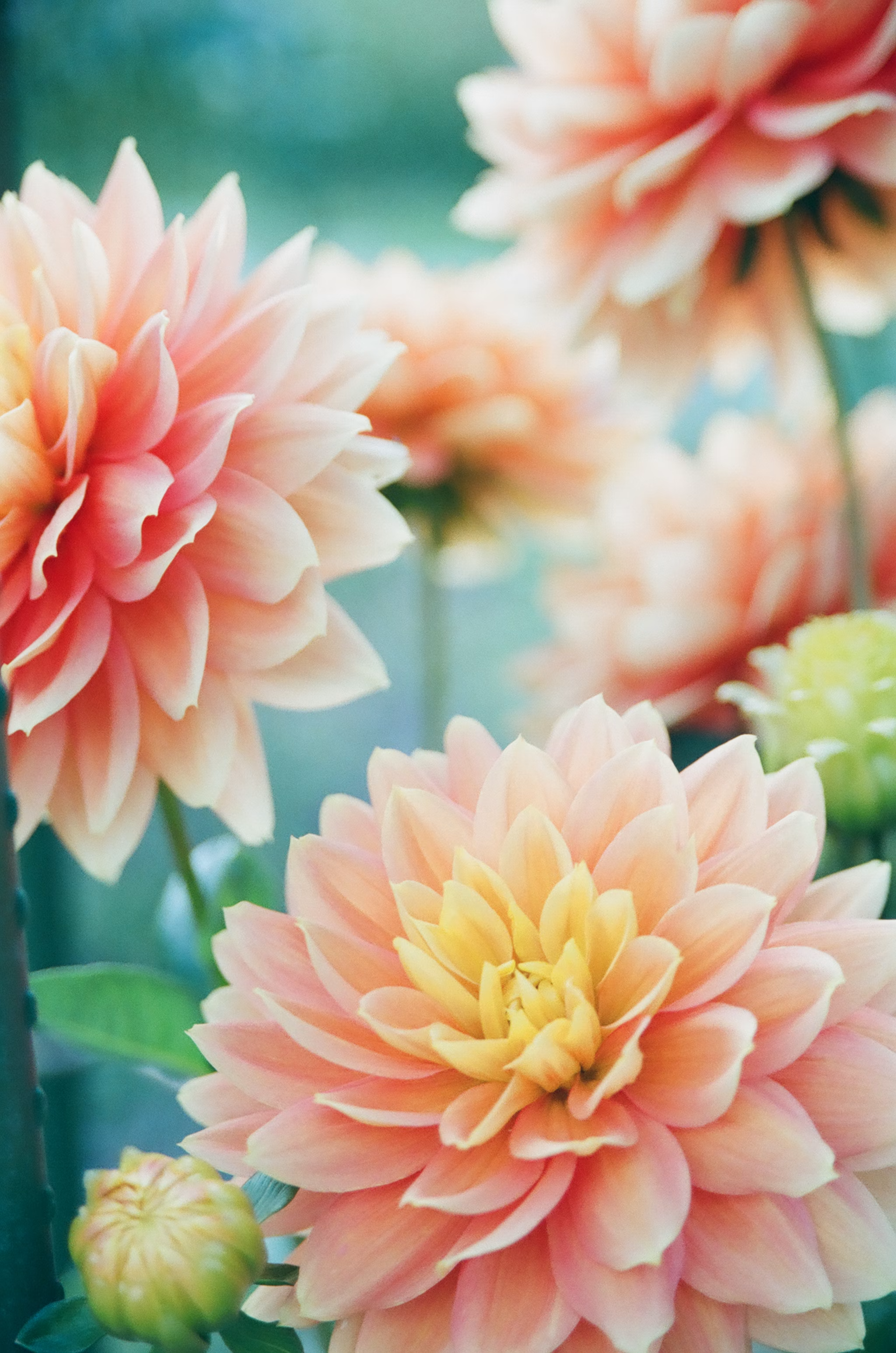
The dahlia is summer's great floral sensation — a plant that transforms the garden into an explosion of colour and form from July right into October. With thousands of varieties ranging from simple "single" forms to intricate cactus blooms with spiky petals, there is a dahlia for every taste and garden.
Dahlia Types
Dahlias are classified by flower form:
Pompon and ball dahlias — round, dense globes 5–12 cm in diameter, perfect for cutting. Cactus dahlias — sharply reflexed petals, dramatic appearance. Decorative dahlias — full double flowers, classic form, often large. Bishop dahlias (Bishop of Llandaff etc.) — single flowers with dark bronze foliage, striking contrast. Dinnerplate dahlias — enormous flowers over 25 cm in diameter.
Planting
Plant dahlia tubers outdoors at the end of May, once the risk of night frost has passed. Tubers should sit about 10 cm deep with the "eye" facing up. Large varieties: space 90–120 cm apart; miniature varieties: 30–60 cm. For earlier blooms, start tubers in pots indoors in April.
Light
Dahlias require full sun — at least 6–8 hours daily. In too little sun, plants stretch and flower poorly.
Watering
Water generously and regularly. During hot periods, daily watering may be needed. Avoid watering directly on foliage and flowers — it increases the risk of grey mould.
Feeding
Fertilise every two weeks with a fertiliser rich in potassium and phosphorus (flowering fertiliser) from July to September. Avoid nitrogen fertilisers, which produce large plants but few flowers.
Staking
Tall dahlia varieties need support. Insert stakes or a net at planting time — it is difficult to add support later without damaging the roots.
Deadheading
Remove spent flowers regularly to encourage continuous blooming. Cut back to the next leaf joint.
Lifting & Storage
In Scandinavia dahlias are effectively annuals — the tubers cannot survive winter in the ground. Dig up the tubers after the first frost nights (October–November), let them dry off, and store in a frost-free, dark, relatively dry place in a box with sand, peat, or sawdust. Temperature should stay at 4–10 °C.
Common Problems
Grey mould (Botrytis) attacks in cool, damp weather. Good air circulation and avoiding evening watering are the best prevention.
Aphids and thrips can attack young shoots. Treat with insecticidal soap.
Tubers rotting in storage results from too much moisture or damage at lifting. Inspect tubers carefully at lifting and dry thoroughly.